Fake QR Codes on Canadian Parking Meters Are Charging Drivers Almost $2,000
Fake QR Codes on Canadian Parking Meters Are Charging Drivers Almost $2,000
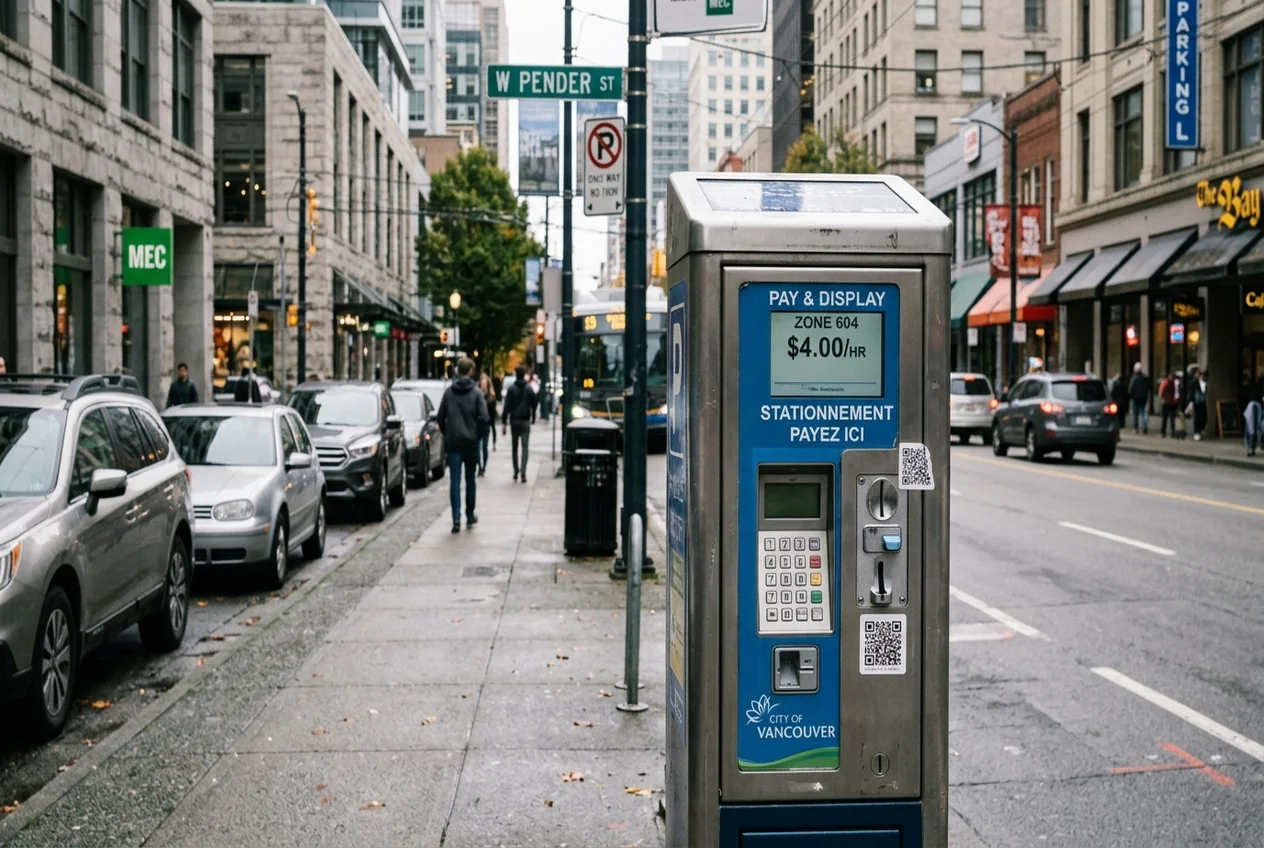
If you are driving in Canada, do not scan a QR code on a parking meter. Scammers are sticking fake QR codes on pay and display machines in Mississauga, Toronto, Kelowna, and other Canadian cities. Scan one and you can end up on a fake payment page that steals your card details and charges you almost $2,000 for what should have been a few dollars of parking.
What happened
On November 4, 2026, the City of Mississauga became aware of fraudulent QR code stickers placed on parking pay and display machines across the city. City staff were deployed immediately and removed the stickers. In a public notice issued November 5, the city said the stickers are designed to redirect drivers to third party payment sites that are not affiliated with the city, and that scanning and using them puts personal and financial information at risk.
This is the second time this year in Mississauga. The city issued a similar warning in April 2026, when fake QR stickers were placed on dozens of parking machines in the downtown core near city hall.
Mississauga is clear about the rule. QR codes have never been a legitimate method of payment at city parking machines. The only way to pay is through the machine itself using the digital payment prompts, with coins, Apple Pay or Google Wallet, or a major credit card such as Visa, Mastercard, or American Express. PayByPhone is also available in Streetsville. Any QR code found on a city paid parking machine is not legitimate and should not be scanned.
The same scam has hit other Canadian cities. In Toronto, a fake Scan to Pay sticker was found on new parking machines along Yonge Street. In Kelowna, British Columbia, fake QR decals were found on approximately 75 pieces of pay parking equipment in February 2026. The City of Mississauga said earlier this year similar scams were also reported in Toronto, Vancouver, Montreal, and Ottawa.
How the scam plays out
You park, you see a QR code on the meter with Scan to Pay under it, and you scan it because that feels like the normal way to pay. The code opens a page that looks like the city parking page or like Green P in Toronto, or like EasyPark or PayByPhone elsewhere. It asks for your license plate and your card details.
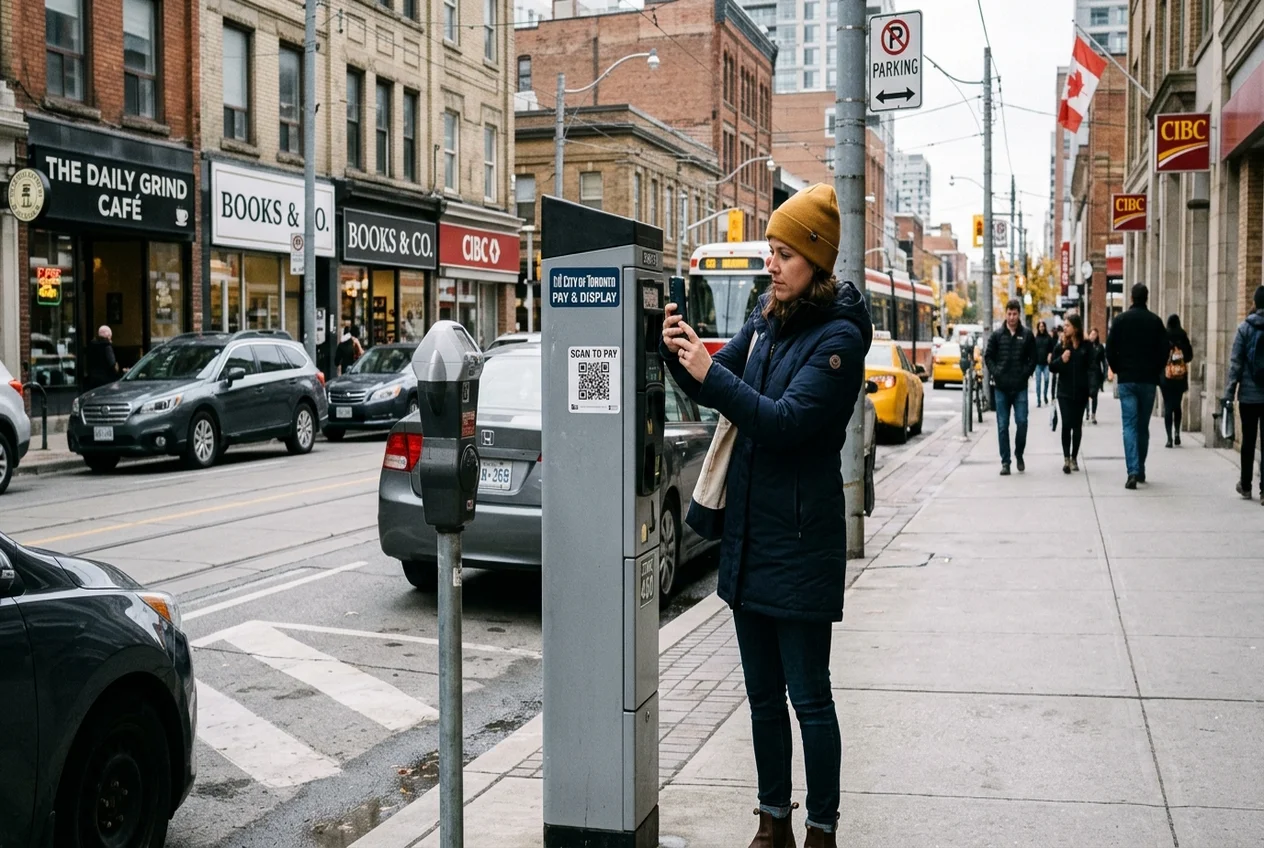
That page is not the city. In Toronto, one fake page investigated in 2026 linked to a temporary site that was not a City of Toronto payment site at all. The page never showed a price up front. It asked for a card first, then started a payment for an unknown amount. The seller account on the payment processor was listed as EasyPark with a Dutch bank account, even though the real EasyPark only offers a mobile app.
Toronto police told CTV News that victims thought they were paying about $7 for street parking and were instead charged almost $2,000. Const. Laura Brabant said the individual thinks they are paying for street parking, scans a QR code, is directed to what appears to be a legitimate website, makes a payment, and instead of being charged $7 is charged almost $2,000.
There is a second loss on top of the charge. Because the money never went to the city, your parking was never actually paid for. You can come back to a parking ticket as well as a stolen card.
In Kelowna, the decals included a portion of the PayByPhone corporate logo, which made them look official. PayByPhone was able to block the fraudulent website once the city reported it. The city security team identified three individuals installing decals late on a Wednesday evening, and the RCMP launched a fraud investigation.
How to spot it
The City of Mississauga lists the warning signs, and they apply in any Canadian city.
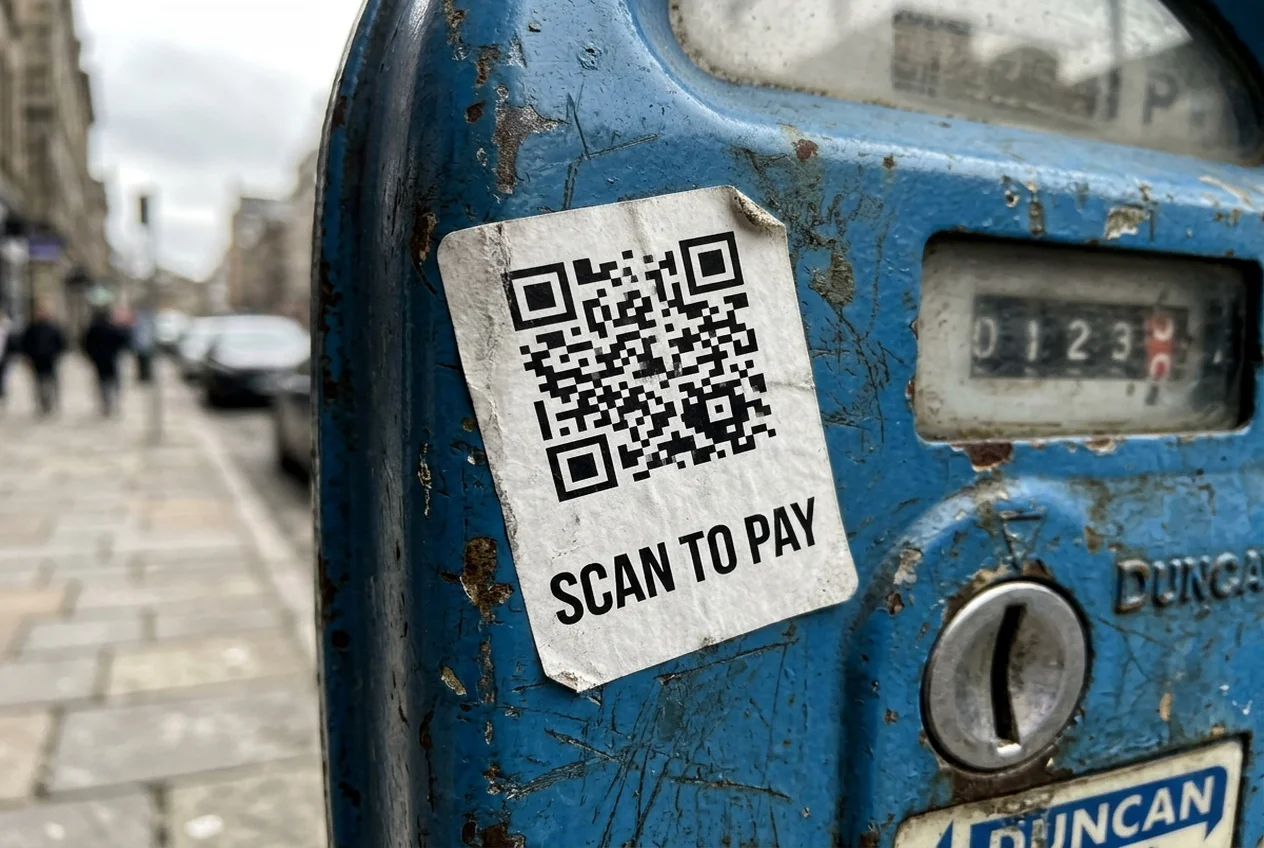
- A sticker placed on or near a parking machine, rather than built into the equipment.
- A QR code that asks you to scan to pay for parking.
- A payment website that looks official but has a slightly different web address or spelling.
- QR codes that include partial logos or branding to look legitimate.
The simplest check is the one Mississauga gives. If a QR code is stuck on a parking machine, do not scan it. Pay at the machine itself using the screen prompts, or use an official parking app you installed yourself from the app store, never through a code on the meter.
How to protect yourself
- Never scan a QR sticker on a parking meter or pay station. Pay with a card or coins at the machine, or open the official parking app yourself.
- In Mississauga, report a suspicious QR code to the city by calling 311 so staff can remove it quickly.
- If you already scanned one and entered card details, contact your card company or bank immediately and report the incident, monitor your account for unauthorized transactions, and report it to the city and to police. In Mississauga, Peel Regional Police take fraud reports in person at a division or community station, not over the phone.
- In Canada, you can also report the fraud to the Canadian Anti-Fraud Centre at 1-888-495-8501.
The broader lesson is the same one behind the booking scams Good Trip has covered before. A scam works when it borrows something real, a real parking meter, a real city logo, a real payment brand, and adds one fake step in the middle. The defense is always the same. Break the chain and go to the source yourself. At a parking meter, that means the machine screen, not a sticker on top of it.
Sources: City of Mississauga: Be aware of fraudulent QR codes on parking machines in Mississauga , EuropeSays: Summary of the City of Mississauga QR code fraud notice , CWL: A QR code scam investigation , City of Kelowna: Parking fraud scheme undone , Atlas Guide: Canada travel scams guide .
Good Trip keeps local etiquette, scam warnings, emergency numbers, offline phrasebooks, and currency conversion on your phone. Download it before you fly.
Take Good Trip offline.
Culture tips, phrasebooks, scam warnings, and emergency data for Japan, Korea, Vietnam, Mexico, and 26 other countries.
Get Good Trip on the App Store →