Korea K-ETA 2026: You Probably Don't Need One — Until January 1
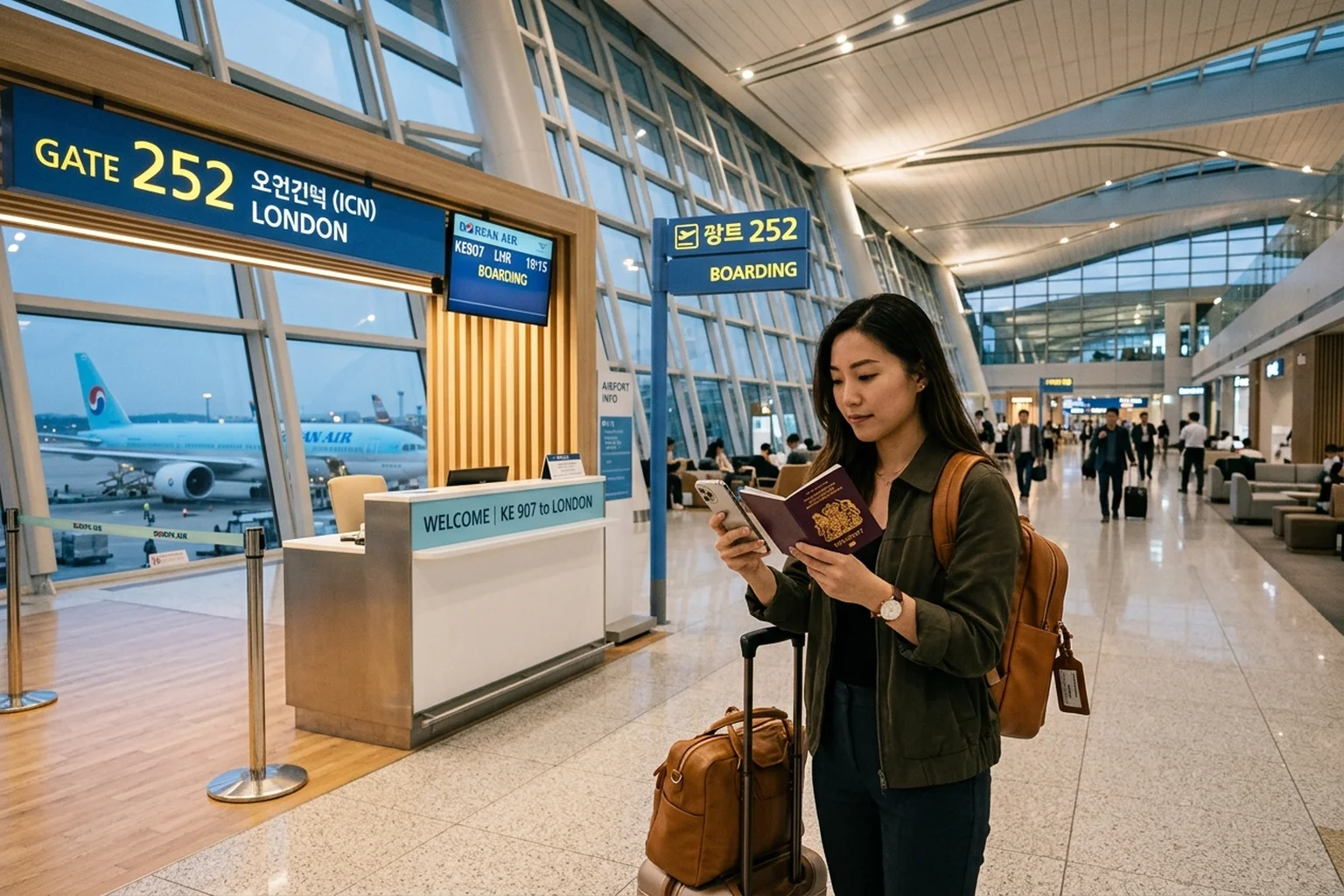
If you’re American and flying to Seoul this year, here’s the short version: you don’t need a K-ETA, you do need something else, and the whole arrangement expires on New Year’s Eve.
That’s three facts, and the internet routinely gets at least two of them wrong. Forum threads still tell people to apply for a K-ETA they’re exempt from. Guides still describe a paper arrival card that was abolished in January. And almost nobody is flagging the deadline that’s coming in four months.
Here’s what’s actually true, and what to do about it.
The short answer
- Americans are exempt from the K-ETA through December 31, 2026. You do not need to apply before boarding.
- The e-Arrival Card is still required for everyone, free of charge at e-arrivalcard.go.kr within three days of arrival.
- The K-ETA exemption is scheduled to expire on January 1, 2027.
- Third-party sites charging $30–$80 are copycats; the real K-ETA costs only 10,000 KRW (~$7) on the government portal.
Where things stand right now
Korea launched the K-ETA — its Electronic Travel Authorization — in 2021, then suspended the requirement in April 2023 for a list of countries as a tourism stimulus. That suspension has now been extended four times.
The current exemption runs through December 31, 2026, and it covers 22 countries and regions including the United States (Guam included), Canada, the UK, Australia, New Zealand, Japan, Singapore and most of Western Europe.
So if you’re from one of those places and traveling in 2026: no K-ETA required.
On January 1, 2027, that’s expected to end. Korea hasn’t announced a fifth extension. The pattern of rolling annual renewals means one is possible — but planning around a renewal that hasn’t been announced is not a plan.
This is the single most confusing thing about Korean entry rules, and it’s why the advice online is such a mess: the rule was paused, not repealed, and a reader can’t tell from a two-year-old forum post whether the pause is still on.
What you actually need instead: the e-Arrival Card
Here’s the part that catches people.
Being exempt from the K-ETA does not exempt you from the e-Arrival Card.
On January 1, 2026, Korea replaced the paper disembarkation card — the white slip they used to hand out on the plane — with a mandatory digital declaration. Paper cards are gone.
| Arrival card detail | Requirement |
|---|---|
| Official portal | e-arrivalcard.go.kr |
| Cost | Free |
| When | From 3 days before your arrival date (Korea Standard Time) |
| Expires | 72 hours after submission, or when you clear immigration |
| Who | Each traveler individually — though one person can file for a group |
| Exempt | K-ETA holders and Korean Residence Card holders |
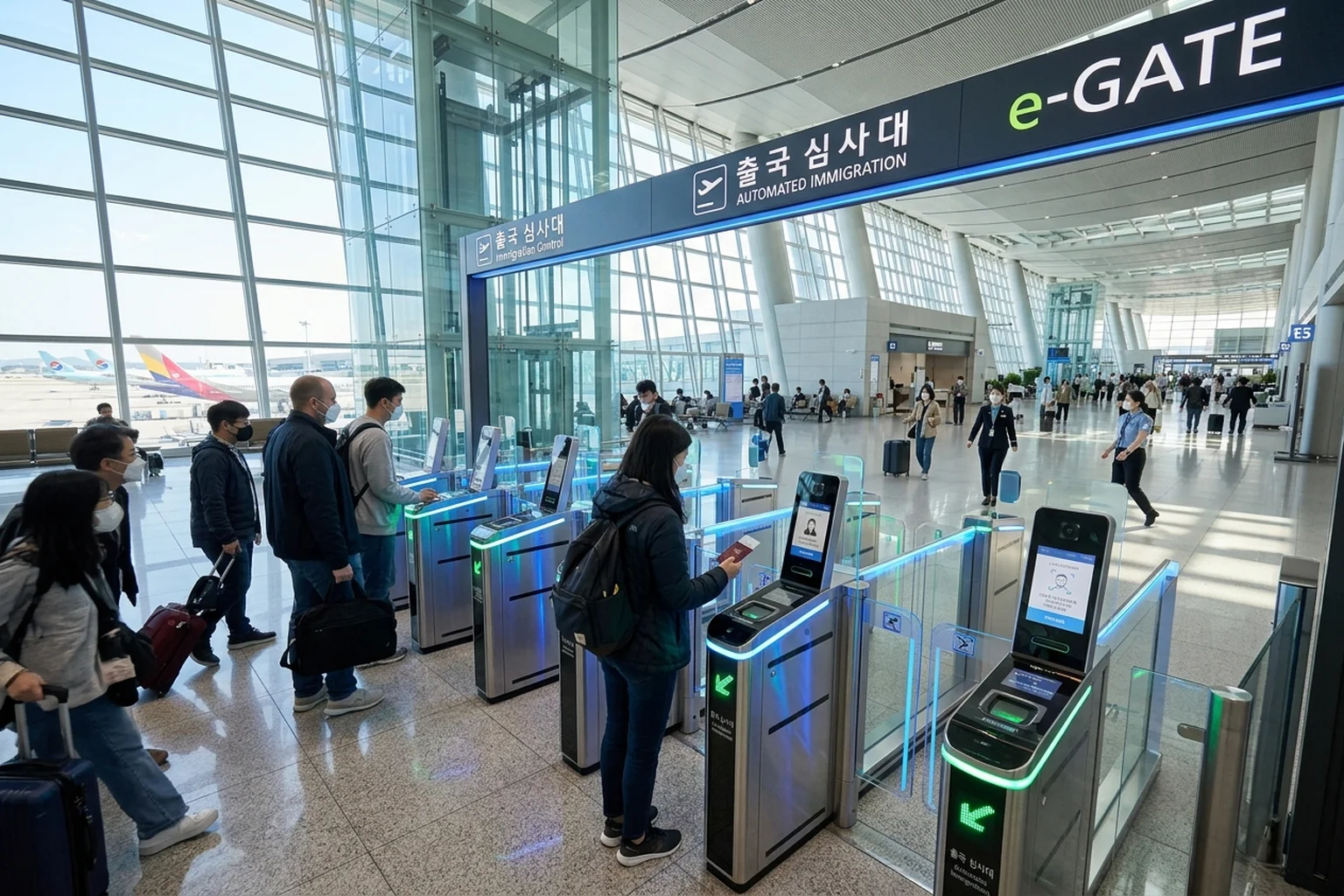
You’ll need your passport details, flight information, your accommodation address in Korea, and planned departure date. It takes about five minutes.
Two practical notes worth having:
- Save the PDF immediately from the confirmation screen and screenshot the confirmation number. As of March 2026 there have been known email delivery problems with Gmail, Outlook, Hotmail and QQ. Don’t wait for the email — use the Inquiry/Edit menu on the portal to verify.
You can edit before immigration, not after. Changed hotel, changed departure date, changed purpose of entry — all editable via Check/Edit until you clear the border. Once you’re through, the form is closed. If your arrival date moves outside the window, just file a fresh one.
A person under 14 can’t be the group representative, so a parent or guardian files for the family.
There’s an airport fallback — you can complete it at the terminal — but you’ll be pulled out of line to do it, which is precisely the situation the form exists to prevent.
The counterintuitive move: pay the $7 anyway
Now the useful bit, and the reason this post exists in August rather than December.
Exempt travelers can still voluntarily apply for a K-ETA. The Korean consulates are explicit about this: if you want the benefits of K-ETA approval, you can apply and pay the fee.
And the main benefit is a good one: holding a valid K-ETA exempts you from filing the e-Arrival Card. Every trip. For three years.
Do the arithmetic:
A K-ETA costs ₩10,000 — roughly $7 to $8, plus about 3% in card processing — and is valid for three years or until your passport expires, whichever comes first.
The e-Arrival Card is free but has to be filed before every single arrival, within a 72-hour window, with your hotel address to hand.
If you’re going to Korea once, don’t bother. File the free arrival card and get on with your life.
If you’re going twice or more in the next three years, buy the K-ETA now. You’ll stop filing arrival cards, and you’ll already be covered when the exemption lapses on January 1 — while everyone else is applying at once during what will be a genuine crunch.
One misconception to kill: there are no dedicated K-ETA lanes at immigration. Holding one doesn’t get you a faster queue. The benefit is the paperwork you skip beforehand, not the line you stand in.
How to apply for a K-ETA
The only official channels are www.k-eta.go.kr and the official K-ETA mobile app. Nothing else.
What you’ll need: a passport with enough validity for your trip (six months is the safe standard), an email address you can check during the process, a recent ID-style digital photo on a plain background, and the address and phone number of your first accommodation in Korea.
The process: enter passport details exactly as printed, upload the photo, add your Korean address and arrival date, answer the health and criminal history questions honestly, and pay.
Four things that make it go smoothly:
- Use the mobile app rather than the website. Photo rejection is the number-one reason applications fail, and the app auto-adjusts your photo. It also gives clearer error messages.
Search your Korean address by its 5-digit postal code, which auto-fills the rest and saves you typing Korean characters.
Triple-check passport fields. Typos cause outright rejection, and the fee is non-refundable even if you’re denied.
Apply at least 72 hours out. Assessment is generally within 72 hours and often takes minutes, but it runs longer around peak periods — summer, Chuseok, Lunar New Year and Christmas.
- One application can cover up to 30 people, which is useful for families and groups. Everyone still needs their own passport and photo; one person just manages and pays for the batch.
A renewed passport means a new K-ETA. The authorization is tied to the passport number you applied with.
The scams
The pattern here is identical to Thailand’s Digital Arrival Card, and it works for the same reason: the real thing is cheap, the process is unfamiliar, and the fake sites outbid the government for ad placement.
K-ETA scam sites have been charging $50 to $100 — up to five times the real fee — for a ₩10,000 application. Some also charge for the e-Arrival Card, which is free.
Your rules:
k-eta.go.kr and e-arrivalcard.go.kr. The .go.kr suffix is a Korean government domain. Anything else — .com, .info, .org, hyphenated variants — is not the government.
The K-ETA app must be published by the Korea Immigration Service. Check the developer name in the store listing.
₩10,000 is the price, about $7–8. Anything materially above that is somebody’s markup.
The e-Arrival Card is free. There is no premium version.
Nobody offers expedited K-ETA processing. Assessment speed is set by Korean immigration, not by who submitted the form.
Don’t click search ads. Type the address or navigate from an official government page.
The best free eligibility check available: go to k-eta.go.kr and start an application. When you select your nationality, an exemption pop-up appears if you qualify. That’s a live check against the current rule, which beats any article — including this one — for accuracy on the day you travel.
Every travel scam runs on the same fuel: you don’t know what normal looks like, so a fake fee looks like a real one. That’s the whole reason I built Good Trip — scam warnings for Korea and 25 other countries, offline, free, no account, no data collected.
The rest of the Korean border
Visa: US citizens don’t need one for tourism or business stays of up to 90 days. Work, study or longer stays need a visa arranged in advance through a Korean embassy or consulate.
Passport validity: six months beyond arrival is the safe standard. A passport expiring within a few weeks of your trip is a risk you don’t need to take.
Q-Code: you’ll see references to Korea’s health registration system in older guides. Verify on the official Korea Disease Control site whether it still applies to you before assuming either way — this is exactly the kind of pandemic-era requirement that gets quietly retired while the blog posts about it stay up.
Frequent visitor? Korea’s Smart Entry Service is worth looking into separately once you’ve been a few times.
Your checklist
| When | Do this |
|---|---|
| Now, if traveling twice+ in 3 years | Apply for K-ETA at k-eta.go.kr — ₩10,000, covers you past January |
| Now, if traveling once | Nothing. Wait. |
| Check before booking | Passport valid 6+ months beyond arrival |
| 3 days before arrival | File the free e-Arrival Card at e-arrivalcard.go.kr — unless you hold a K-ETA |
| Immediately after filing | Save the PDF, screenshot the confirmation number |
| Before Jan 1, 2027 travel | Confirm whether the exemption was extended; if not, K-ETA is mandatory |
Before you fly
Incheon is one of the world’s best-run airports, which lulls people into arriving unprepared for everything after it — the taxi rank, the T-money card, the fact that your card won’t work in half the places you want to eat.
That’s why I built Good Trip. It’s a free app with destination-specific scam warnings, an offline phrasebook, a currency converter, local emergency numbers, and step-by-step eSIM setup — for Korea and 25 other countries. All of it works offline, so it’s already on your phone when you land.
No account. No data collected. Download it before you fly.
Sources: K-ETA official portal, Korea Immigration Service , Korean Consulate General in New York — notice on the exemption extension to Dec 31, 2026 , Korean Consulate General in Atlanta — exemption extension notice , Visit Korea (KTO) on the extension , Fragomen on the K-ETA exemption and country list , Korvia on the e-Arrival Card and the K-ETA distinction , Korea Ministry of Justice e-Arrival Card portal guidelines, July 2026 .
Good Trip keeps local etiquette, scam warnings, emergency numbers, offline phrasebooks, and currency conversion on your phone. Download it before you fly.
Good Trip works 100% offline.
Curated culture tips, phrasebooks, scam warnings, and emergency data for Japan, Korea, Vietnam, Mexico, and 22 other countries.
Get Good Trip on the App Store →