Mexico Scams 2026
Mexico is safe for most visitors. The US State Department rates the country Level 2, exercise increased caution, the same level it gives France, Italy, and the UK. The problems that actually cost people money are not violent crime. They are a handful of scripts that run the same way every day, in the same few places, and they all work the same way: a stranger gives you a price after you are already committed, or a price you never agreed to at all.
This guide covers the 10 scams that cost Mexico visitors the most in 2026, with the tell for each one and what to do instead. Every figure below comes from a government advisory, a police report, or press coverage from 2026. Sources are at the end.
Official sites to use
Pay the Quintana Roo visitor tax only at visitax.gob.mx. Check the US State Department Mexico advisory at travel.state.gov before you fly, and read the entry for the state you are visiting, not just the national level. File consumer complaints, including timeshare complaints, with PROFECO at profeco.gob.mx. Book ADO buses at ado.com.mx. Book tours and transport with the operator directly, never through a stranger at the airport.
For the bigger picture, our guide to whether Argentina is safe to visit shows how we read official advisories, and Mexico City’s Day of the Dead parade guide covers the country’s biggest festival weekend. The basics are in our Mexico travel tips for Americans.
The one rule that stops all of them
Never accept a service before the price is settled, in pesos, with the official source. Not a taxi, not a transfer, not a tour, not a rental car, not a timeshare presentation, not a bag carried to a counter. The price is agreed before you get in, before you sign, before you hand over a card, and it is agreed in pesos. Every scam on this list needs you to commit first and learn the price second. The second rule follows from the first: if a stranger approaches you to arrange something, the answer is no. Your driver, your hotel, your tour operator, and your bank are the only people who arrange things for you.
1. The airport gauntlet and the “your shuttle left” trick
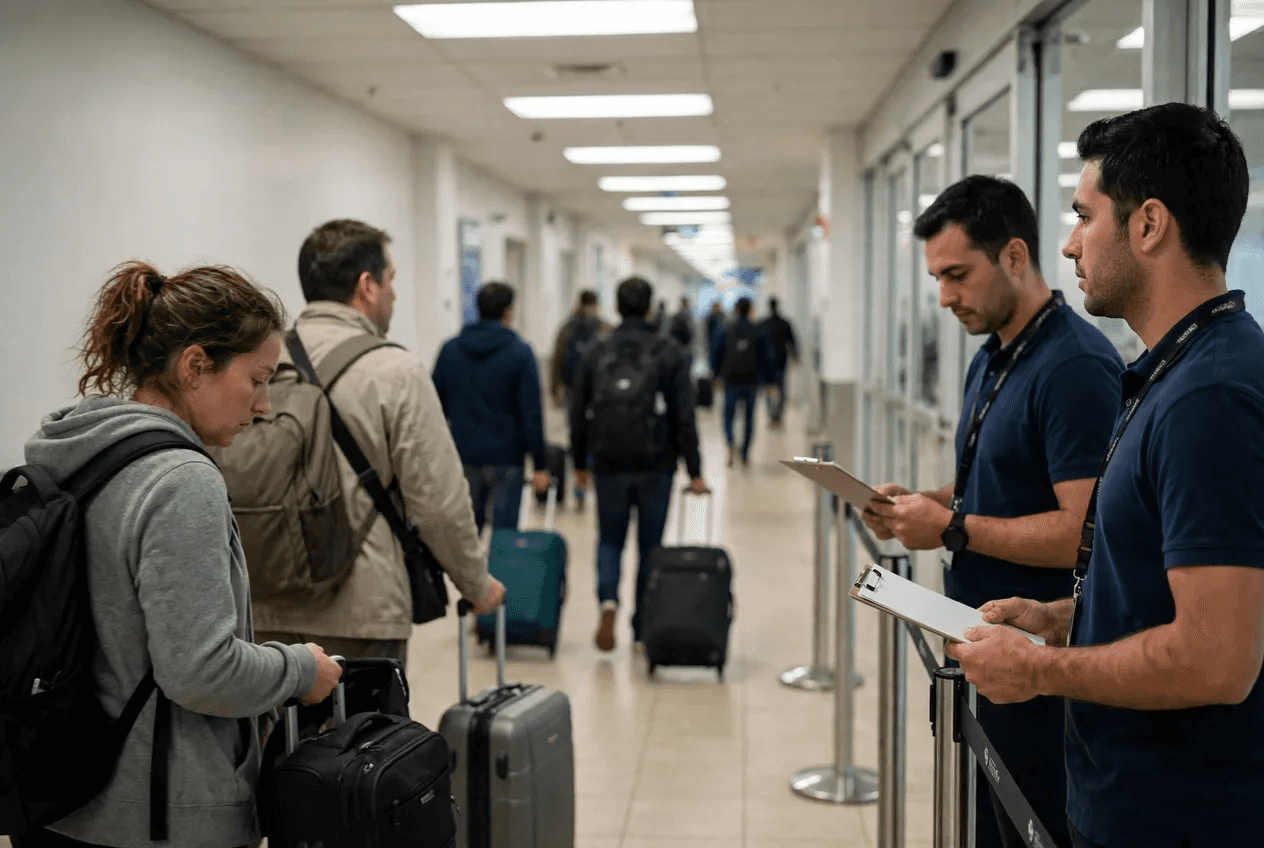
How it works: After customs at Cancun International Airport, you walk a corridor full of people in official-looking uniforms with lanyards and clipboards. They ask which resort you are staying at, offer to check your reservation, or promise a free breakfast tour with a gift at the end. They are timeshare recruiters or unlicensed transport sellers. None of it is required to leave the airport.
The sharper version of the same trick is the one travelers reported most this fall. Someone in an “official transport” shirt tells you your booked shuttle already left, offers to call your transfer company for you, and then sells you a new ride. Transfer companies do not send strangers into the hallway to find you. In September 2026, a couple posting on r/cancun described paying 310 dollars in cash after their cards were supposedly declined during exactly this kind of fake call, for a ride they had already paid for. Cancun Sun reported in September 2026 that drivers wearing “official transport” shirts were approaching arriving travelers at Terminals 2 and 4, and Riviera Maya News reported harassment by vendors and unlicensed drivers at Terminal 4 the same month.
What it costs: A few hundred dollars for a ride you already paid for, or hours lost to a timeshare presentation.
The tell: Anyone inside the terminal who wants to talk about your transport, your reservation, or a free gift.
What to do: Walk straight past everyone in the corridor after customs. Do not stop, do not show your paperwork, do not let anyone call your company for you. Your real driver is outside the building, through the exit signed Tour Operators and Hotel Shuttles, holding a sign with your name on it. Screenshot your confirmation and your transfer company’s WhatsApp number before you fly. If you have no transfer booked, the ADO bus to downtown Cancun, Playa del Carmen, or Tulum leaves from platforms outside Terminals 2, 3, and 4. Buy at ADO’s own counter. As of October 2026 the fare to Playa del Carmen was 270 pesos, about 15 dollars.
2. Unauthorized baggage handlers at Cancun airport
How it works: Unlicensed baggage handlers work Terminals 2 and 4 at Cancun airport, without identification, and target first-time visitors, especially elderly travelers and people who look unfamiliar with the layout. They take your bag, carry it a short distance to a check-in counter, and then demand a fixed fee. Riviera Maya News reported on February 27, 2026 that they were charging foreign tourists up to 50 dollars and Mexican nationals over 500 pesos for minimal distances. Authorized handlers work for tips, wear visible identification, and are represented by an association. The unlicensed operators have no identification, and airport workers say attempts to bring them into compliance have been met with violence.
What it costs: Up to 50 dollars for carrying a bag a few steps.
The tell: Help you did not ask for, from someone with no airport ID.
What to do: Keep a hand on your bags, say no firmly, and never let a stranger take your luggage. Never carry luggage for a stranger either.
3. Unmetered taxis and the “your hotel is closed” detour
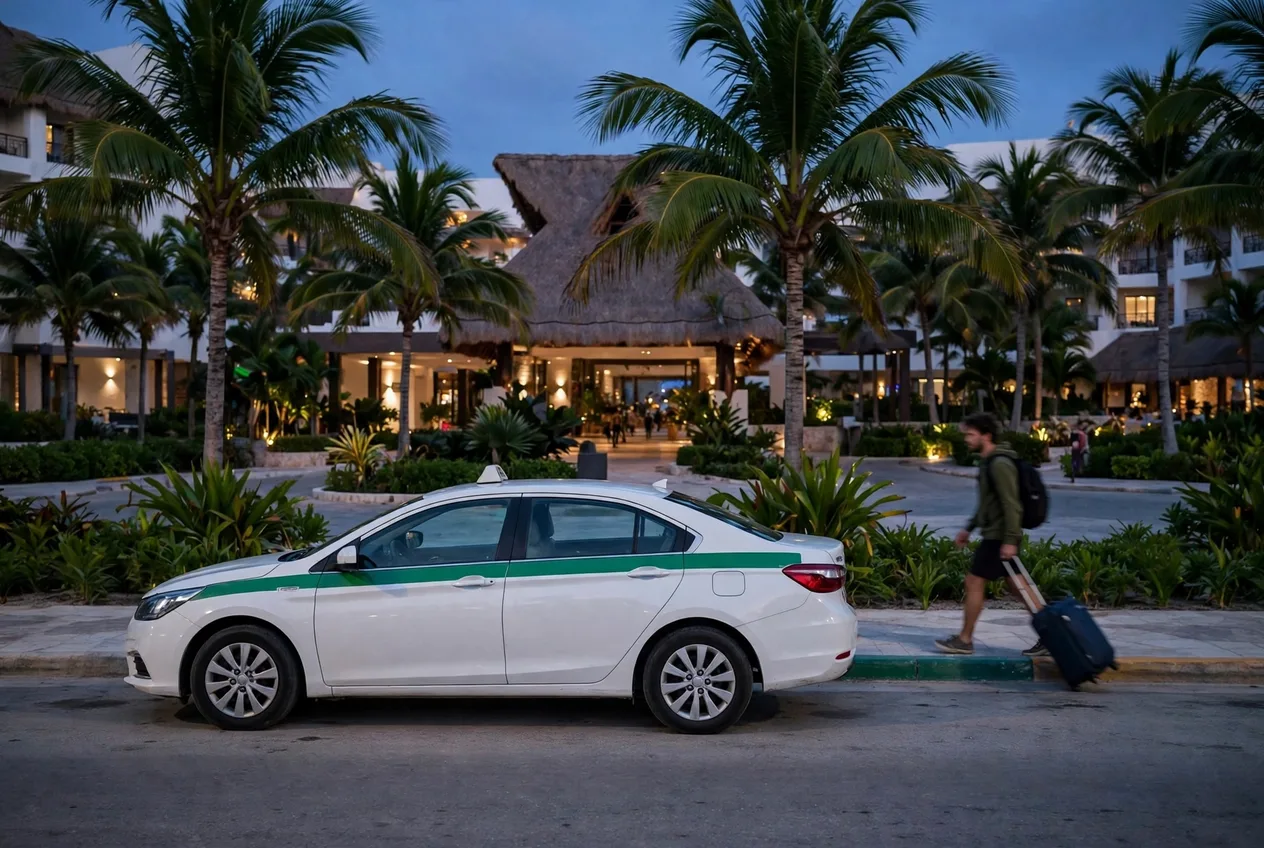
How it works: Cancun taxis have no meters. The fare is whatever you agree before you get in, and if you do not agree one, the driver names it at the end. Curbside taxis at the airport and in the Hotel Zone quote tourist rates two to four times the real price, highest at night. Two classic variations run on the same trick. The driver takes the long way round, or claims your hotel is closed, under renovation, or unsafe, and drops you at a different hotel that pays him a commission. In Mexico City, street-hailed taxis carry a worse risk: unlicensed cabs have been used for express kidnappings, where the victim is held for a few hours and driven between ATMs until the card limit is reached.
What it costs: Two to four times the fair fare on a normal ride, and far more in the worst cases.
The tell: A fare quoted after the ride, a fare quoted in dollars at a bad rate, or a driver with opinions about your hotel.
What to do: Agree the total fare in pesos before the door closes, every time, even for a three-block ride. Pay in pesos. Use Uber in town, where the price is fixed before the ride, or a hotel-booked taxi, or a sitio taxi stand. In Mexico City, never hail a taxi on the street. At Mexico City airport, buy an official taxi ticket at the counters inside the terminal and ignore anyone offering transport.
4. Timeshare presentations and the cartel resale fraud
How it works: The free breakfast, the free tour, the free transport, the gift at the end. Every one of them is bait for a presentation that runs three to six hours under extreme sales pressure, in Cancun, Los Cabos, and Puerto Vallarta. The pitch is to buy a vacation club or points package for a large sum up front plus yearly maintenance fees. If you sign and regret it, Mexican law gives you a way out, but only if you move fast.
The second half of the timeshare problem is worse, and it targets people who already own one. Call centers in Mexico, staffed by telemarketers fluent in English, call owners claiming a buyer is ready, or a renter wants their week, or a company can get them out of the contract. They ask for upfront fees for taxes or closing costs. There is no buyer. On February 19, 2026, the US Treasury sanctioned a timeshare fraud network led by the Cartel de Jalisco Nueva Generacion, targeting Kovay Gardens, a resort near Puerto Vallarta, along with five individuals and 17 companies. It was the sixth time the Treasury had sanctioned people linked to the cartel’s timeshare fraud, bringing the total designated to over 90 individuals and entities. According to the FBI, about 6,000 American victims reported losing nearly 300 million dollars to Mexico-based timeshare fraud between 2019 and 2023, and in 2024 alone the FBI’s Internet Crime Complaint Center received nearly 900 complaints with reported losses over 50 million dollars.
What it costs: Hours of your vacation at a presentation, thousands of dollars if you sign, and in the resale fraud, often life savings. The Treasury’s February 2026 release says timeshare fraud often targets vulnerable older Americans and can defraud victims of their life savings.
The tell: A free gift that requires your time, or a caller who already knows your name, your resort, and the week you own. Owner lists come from insiders at resorts. Knowing your details proves nothing about the caller.
What to do: Say no to every presentation, every time. If you did sign, Mexican federal consumer protection law, Article 56, gives you five business days to cancel for any reason, and the right cannot be waived even if the contract says you waived it. Cancel in writing, through more than one channel, and keep proof. The developer must refund everything you paid within 15 business days. If it stalls, file a complaint with PROFECO. Its department for residents abroad takes complaints by email at extranjeros@profeco.gob.mx. Never pay upfront fees to a cold caller about a buyer, a renter, or an exit.

5. Police shakedowns, real and fake
How it works: This is the scam with the most 2026 evidence behind it, and the hardest to handle in the moment, because the person demanding money may be a real officer. Criminals pose as police to fine tourists for invented offences, and some genuine officers have done the same. Rental car drivers are a favored target. The victim is told to pay cash on the spot to avoid detention, or to avoid a fine, or to avoid having the car impounded.
In June 2026, a Cancun traffic officer was filmed demanding 630 dollars, about 10,900 pesos, from foreign tourists in the Puerto Juarez area. Mayor Ana Paty Peralta announced his dismissal on June 22. A week later, two Cancun tourist police officers were fired after body camera footage showed them using portable card terminals to collect bribes from residents and tourists. Then on July 6, 2026, state prosecutors announced the arrest of three Cancun tourist police officers who allegedly stopped two foreign tourists in the early hours of June 3, falsely accused them of urinating in public, demanded 1,400 dollars, and escorted them to an ATM where they were forced to withdraw 800 and 600 dollars. The charges carry potential sentences of up to 25 years.
What it costs: Hundreds to over a thousand dollars per stop, plus the ATM withdrawals.
The tell: An officer, real or fake, who wants cash on the spot, or who wants to walk you to an ATM.
What to do: Never pay a fine in cash at the roadside. Real fines are paid later, at a police station, with a written ticket. Ask for the written ticket, note the badge number and the patrol car number, and do not hand over your passport or cash. If you are driving, keep the doors locked until you are sure it is a real officer. If you feel unsafe, call 911. Offering a bribe is itself an offence under Mexican law.
6. ATM skimming and the card terminal price swap
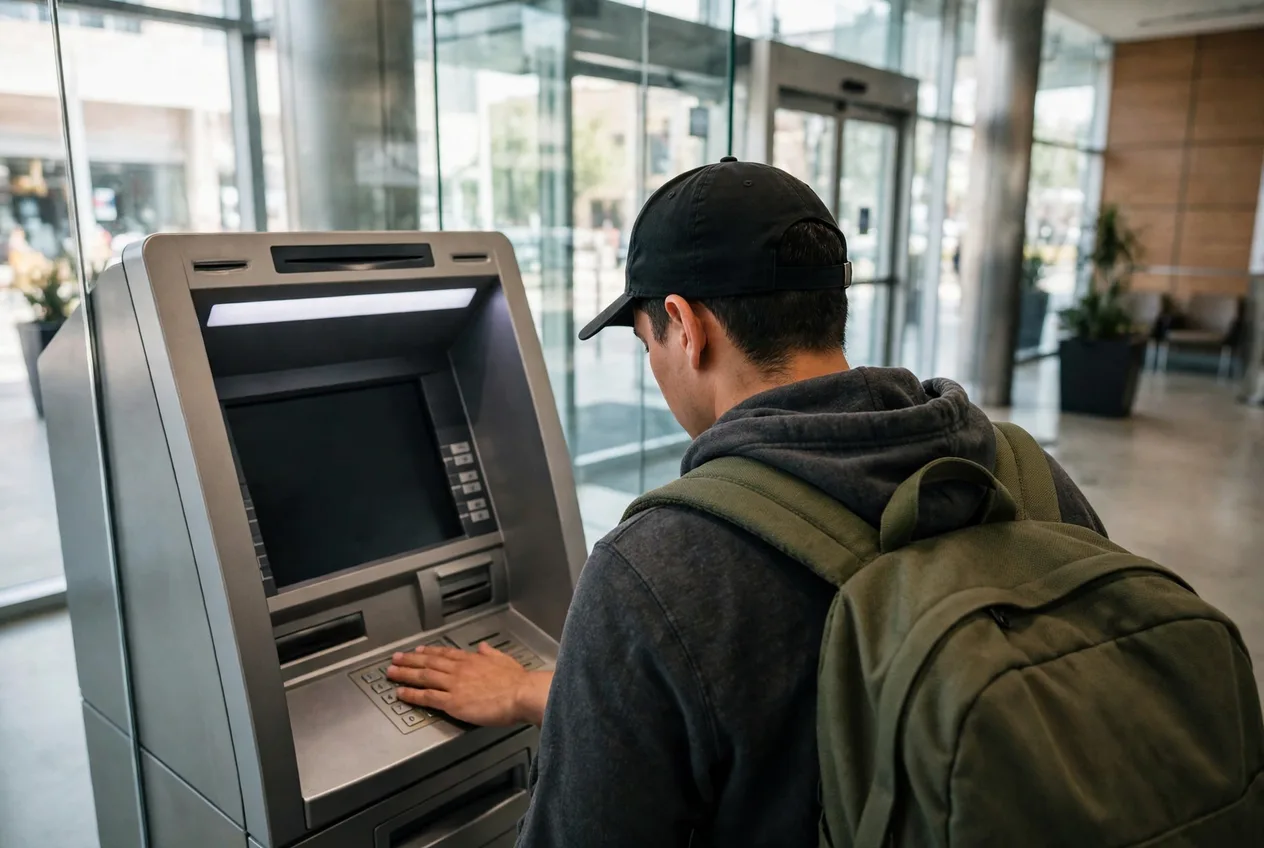
How it works: Skimming devices fitted to ATMs and card terminals in tourist areas copy your card data, and a hidden camera or keypad overlay captures your PIN. Cloned cards are often used within hours, before you get back to your hotel. The US State Department singles out ATMs in Mexican tourist areas as popular skimming targets, and the UK Foreign Office notes criminals specifically watch people using ATMs and exchange offices in resort areas. The worst machines are standalone ones in convenience stores, hotel lobbies, and tourist strips, rather than machines inside bank branches.
The street version of the same trick happens in taxis and vans. The driver hands you a wireless card terminal when you are tired and distracted, and the amount on the screen is not the amount you agreed. Cancun Sun lists this as the top scam affecting Cancun travelers in 2026.
What it costs: Whatever the cloned card can withdraw before you notice, or the swapped amount on a single ride.
The tell: A loose or differently colored card slot, a machine that is not attached to a bank, or a terminal where you cannot see the final amount.
What to do: Use ATMs inside bank branch lobbies during opening hours only, BBVA, Banamex, Santander, or HSBC Mexico. Inspect the card slot before inserting your card. Cover the keypad when you enter your PIN. Decline the machine’s own currency conversion and always choose to be charged in pesos. Never let a stranger help you at an ATM. Read the amount on every card terminal before you tap or enter your PIN, every time.
7. The rental car insurance bait and switch
How it works: You book a compact car in Cancun online for a few dollars a day. At the counter, the total multiplies. The reason is legal: Mexican federal law requires every vehicle on federal roads to carry third-party liability insurance, and many online rates simply leave that cover out. Your US auto policy does not cover you in Mexico, and your credit card’s rental collision coverage covers damage to the rental car, not liability to other people. The counter adds the liability cover because the law requires it, plus often-pushy upsells, and your cheap rental balloons. A realistic all-in price from a reputable company is roughly 30 to 60 dollars a day for an economy or compact car. The 3 to 10 dollar headline rates exclude the mandatory cover, and that is why the quote triples at the counter.
Two more charges follow the same pattern. Pre-existing damage is blamed on you at return, and gas station attendants, who pump for you at full-service stations, can run a pump that was not zeroed or charge for fuel you did not get.
What it costs: The gap between a 5 dollar headline and a 30 to 60 dollar real day rate, plus damage claims and fuel overcharges.
The tell: A daily rate that looks too cheap to be real, or a counter agent who says your credit card cover is enough.
What to do: Book a rate that explicitly includes mandatory third-party liability in the total. Read the inclusions, not just the headline. Compare totals with liability included, not base rates. Use a real credit card with room for the deposit hold, often 5,000 to 20,000 pesos, and never a debit card. Before you drive away, film the car inside and out, every panel, the windshield, the wheels, the fuel gauge, and the odometer. Do it again at return. At gas stations, check the pump reads zero before the attendant starts, state the amount in pesos, and watch the pump. Return the tank full and keep the fuel receipt.
8. Padded bar and restaurant bills, and spiked drinks
How it works: In Hotel Zone and nightlife-area restaurants and bars, staff add an unauthorized automatic tip or service fee, sometimes around 20 percent, add drinks you never ordered, or convert the bill to dollars at a poor exchange rate, hoping you sign without checking. The same nightlife strips carry the worse version of the problem. The US State Department warns that criminals sometimes drug drinks in resort areas, and drink spiking has been reported at nightclubs in Cancun’s Hotel Zone, particularly during spring break, and in bars around the Cabo San Lucas marina.
What it costs: Twenty percent or more on every padded bill, and far worse if a drink is spiked.
The tell: A bill with a service charge you did not agree to, drinks you did not order, or a total in dollars when the menu was in pesos.
What to do: Keep the menu until the bill arrives and review every line item. Pay in pesos, decline automatic currency conversion, and ask staff to remove any unrequested service charges before paying. Tip in cash separately if you choose to. Watch your drink being made, never leave it unattended, never accept drinks from strangers, and go out in groups.
9. Fake Visitax sites and airport kiosk overcharging
How it works: Quintana Roo, the state containing Cancun, Playa del Carmen, Tulum, and Cozumel, charges foreign visitors a state tourist tax called Visitax. It is set by law at 2.5 times the daily UMA, Mexico’s indexed reference unit, which works out at about 293 pesos per person in 2026, roughly 16 dollars. It is paid online, and the official portal is visitax.gob.mx.
Search results for Visitax are crowded with third-party sites that look official and add their own fees, some charging 50 to 90 dollars for a 16 dollar tax, and some collecting passport data. At the airport, travelers reported collection booths in Terminal 2 in fall 2026 asking up to 550 pesos per person, nearly double the official rate. The state announced a crackdown on the overcharging, and the governor has said the physical kiosks and vest-wearing inspectors are being phased out in favor of digital verification.
What it costs: Two to four times the real tax on a copycat site, or nearly double at an airport kiosk.
The tell: Any Visitax site that does not end in .gob.mx, a checkout total far above about 16 dollars per person, or a sponsored search result at the top of the page.
What to do: Pay only at visitax.gob.mx, before you fly. The official portal issues the QR code immediately and charges nothing extra. The amount on the official portal at the moment you pay is the amount, and it applies to every foreign visitor, children included.
10. Virtual kidnapping phone calls
How it works: A caller claims a relative has been kidnapped, or that you are a suspect in a crime, or that you are in danger and must move to another hotel and stay off the phone. Nobody has been taken. The caller keeps you on the line, issues threats, sometimes impersonating a cartel to frighten you, and pressures you to pay immediately by transfer, top-up, or gift card codes, or to withdraw cash from an ATM. There is also a hotel version: a call comes through to your room demanding you move elsewhere, which cuts you off from your surroundings and prevents you from verifying anything. The UK Foreign Office describes it plainly: a common phone scam involves criminals posing as a kidnapped family member or employee and demanding money for their release. The Government of Canada warns that many of these tactics involve criminals calling potential victims in their hotel rooms.
What it costs: Whatever you wire or withdraw before you realize nobody is missing.
The tell: Urgency, secrecy, and instructions not to hang up or call anyone. Real kidnappers do not call ahead, so receiving the call at all is proof of a scam.
What to do: Hang up. Do not give out names, your room number, or your travel plans. Contact the supposedly affected person directly, from a second phone if you have one. Agree on a code word with family before you travel. In Mexico City, you can report it to the Consejo Ciudadano helpline at +52 55 5533 5533. Do not post where you are staying or your real-time plans on social media.
If you were scammed
Call 911 for police, ambulance, and fire anywhere in Mexico. For tourist assistance, call 078, the federal tourist assistance line and the Green Angels roadside service. For anonymous reports, call 089. File a report with the Public Prosecutor’s office, the Ministerio Publico, and keep the reference number for insurance, banks, and your embassy. For card fraud, call your bank the same day and ask it to block the card. For overcharging, surprise fees, and pressure-signed contracts, file a complaint with PROFECO, Mexico’s federal consumer protection agency. Screenshot everything before it disappears, the page, the chat, the account details, the receipt. The US Embassy in Mexico City is at Presa Angostura 225, Colonia Irrigacion, and its main number is +52 55 2579 2000. From the US or Canada, the State Department’s Overseas Citizens Services line is 1-888-407-4747, or +1-202-501-4444 from elsewhere.
Good Trip’s Mexico guide works offline, so the scam warnings, the taxi advice, and the emergency numbers for every place above are on your phone at the Cancun arrivals door or a taxi rank, with no signal needed.
Sources: US Department of State, Mexico Travel Advisory, Level 2, reissued May 29, 2026. Quintana Roo Level 2 with no restrictions on US government employees, Yucatan and Campeche Level 1, six states Level 4. , UK Foreign, Commonwealth and Development Office, travel advice for Mexico, updated October 20, 2026. Virtual kidnapping, fake and genuine police extortion, unlicensed taxi robberies, drink spiking in resort areas. , Government of Canada, travel advice for Mexico, 2026. Virtual kidnapping calls to hotel rooms, fake police with look-alike vehicles, card skimming, Canadian auto insurance not valid in Mexico. , US Department of the Treasury, Office of Foreign Assets Control, February 19, 2026. Sanctions on Kovay Gardens timeshare resort near Puerto Vallarta and a CJNG timeshare fraud network, five individuals and 17 companies, sixth CJNG timeshare action, over 90 individuals and entities designated. , FBI figures via SeniorShieldTools, November 8, 2026. About 6,000 American victims and nearly 300 million dollars lost to Mexico timeshare fraud 2019 to 2023, nearly 900 complaints and over 50 million dollars in 2024, FinCEN over 850 suspicious activity reports citing about 330 million dollars. , Nolo, Mexico timeshare buyer rights. Five business days to cancel under Mexican law, refund within 15 business days, PROFECO complaints. , PROFECO Conciliation for Residents Abroad, complaints by email at extranjeros@profeco.gob.mx. , Riviera Maya News, February 27, 2026. Unauthorized baggage handlers at Cancun airport Terminals 2 and 4 charging foreign tourists up to 50 dollars. , Cancun Sun, September 23, 2026. Pirate transporters in 'official transport' shirts at Terminals 2 and 4, intimidating travelers and claiming rideshare apps are illegal at the airport. , Kay Tours, October 12, 2026. 'Your shuttle already left' as the most reported airport scam of fall 2026, couple on r/cancun paid 310 dollars in cash in September 2026. , Maya Coast Guide, updated October 28, 2026. ADO bus fare to Playa del Carmen 270 pesos as of October 2026, airport information desks, timeshare presentations, unmetered taxis, card skimming. , Riviera Maya News, June 23, 2026. Cancun traffic officer fired after video showed him demanding 630 dollars from tourists. , Riviera Maya News, July 1, 2026. Two Cancun tourist police officers fired after body cameras caught them using card terminals to collect bribes. , Riviera Maya News, July 6, 2026. Three Cancun tourist police officers arrested for extorting 1,400 dollars from two foreign tourists, forced ATM withdrawals of 800 and 600 dollars, charges carrying up to 25 years. , Cancun Sun, 2026. Top five Cancun scams, including the credit machine price swap, the 'official' airport worker, and unlicensed tour sellers. , Cancun Trip Planner, updated September 30, 2026. Rental car all-in prices of 30 to 60 dollars a day versus 3 to 10 dollar headline rates, mandatory third-party liability. , Gate 36, October 2026. Article 63 Bis of Mexico's federal roads law, mandatory third-party liability, US policies and credit cards do not cover it, PROFECO renter checklist July 2026. , Nomadr, 2026. Cancun safety, restaurant bill padding with unauthorized 20 percent service fees, drink spiking in Hotel Zone clubs, transit officer fired in 2026. , Always Packed, November 14, 2026. Visitax set at 2.5 UMA, 2026 daily UMA 117.31 pesos, about 293 pesos per person, official portal visitax.gob.mx only. , Mr. Playas, 2026. Visitax 285 pesos in earlier UMA years, airport kiosks charging up to 550 pesos in fall 2026, state crackdown. , Travel Off Path, November 2026. Imposter fee websites charging 50 to 90 dollars for a 16 dollar tax, Quintana Roo phasing out airport kiosks for digital verification. , Actividades en Mexico, updated October 9, 2026. Virtual kidnapping, Consejo Ciudadano helpline +52 55 5533 5533, report to Ministerio Publico, anonymous reports on 089. , Travel Dojo, 2026. Mexico safety, ATM skimming, fake police fines, express kidnapping, emergency numbers 911 and 078. , Atlas Guide, Mexico scam overview 2026. Timeshare five business day cancellation right, ATM skimming as the most frequently reported tourist financial crime, fake police in Mexico City. .
Good Trip keeps local etiquette, scam warnings, emergency numbers, offline phrasebooks, and currency conversion on your phone. Download it before you fly.
Related guides
Mexico Travel With Kids: New Law Requires Minor Paperwork
Mexico's new tourism law makes hotels verify your relationship to any child traveling with you. Which documents to bring, and what happens if you can't.

Where to Travel for Christmas 2026
Christmas markets in Germany, France, Switzerland and Belgium, city lights in London and Tokyo, warm weather in Mexico and Thailand, with dates and watch-outs.
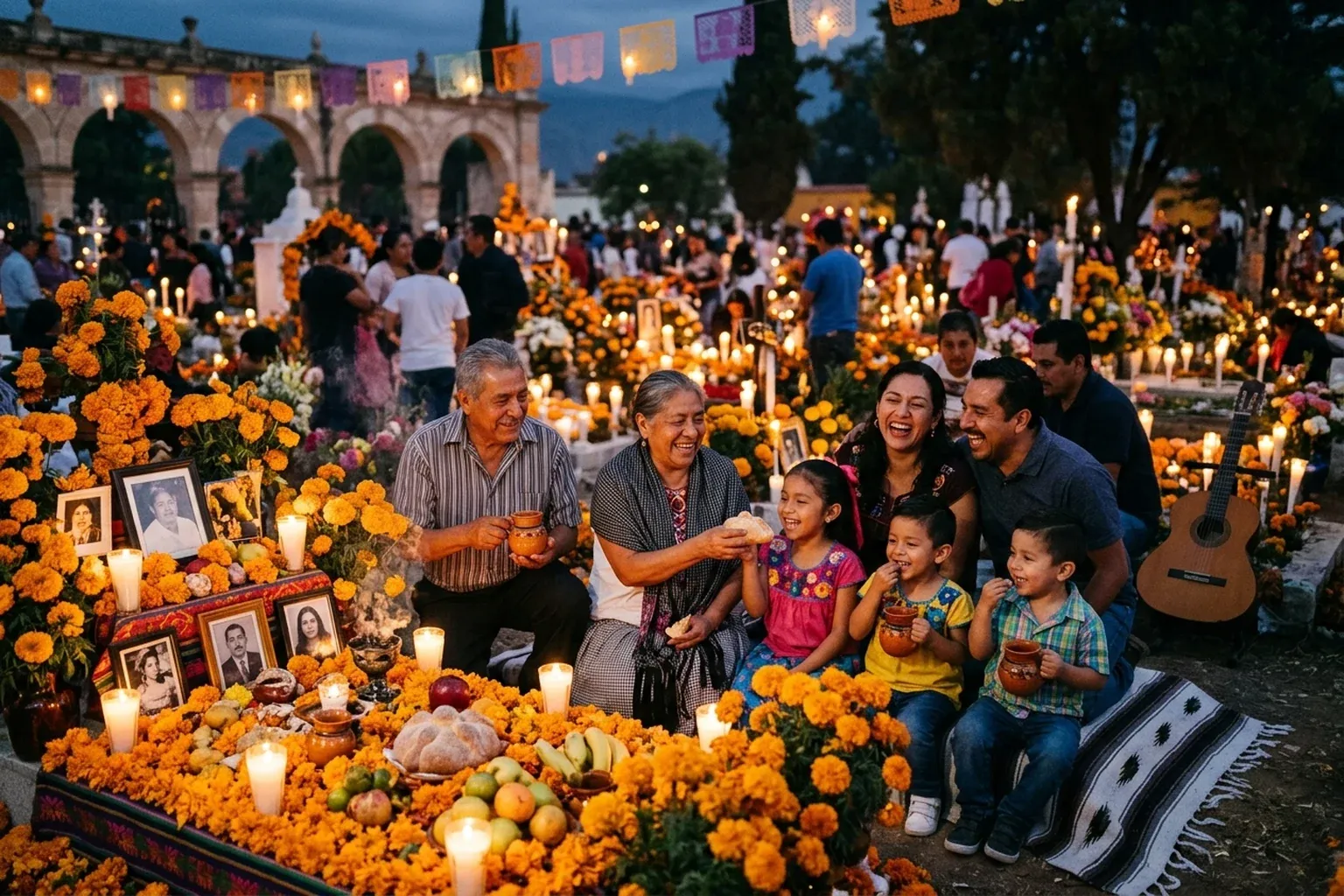
Mexico City Day of the Dead Parade Guide
Mexico City's Day of the Dead parade only began in 2016, inspired by a Bond film. Where the traditional celebrations happen, and the advisory to know.
Take Good Trip offline.
Culture tips, phrasebooks, scam warnings, and emergency data for Japan, Korea, Vietnam, Mexico, and 28 other countries.
Get Good Trip on the App Store →