Paris Scams 2026
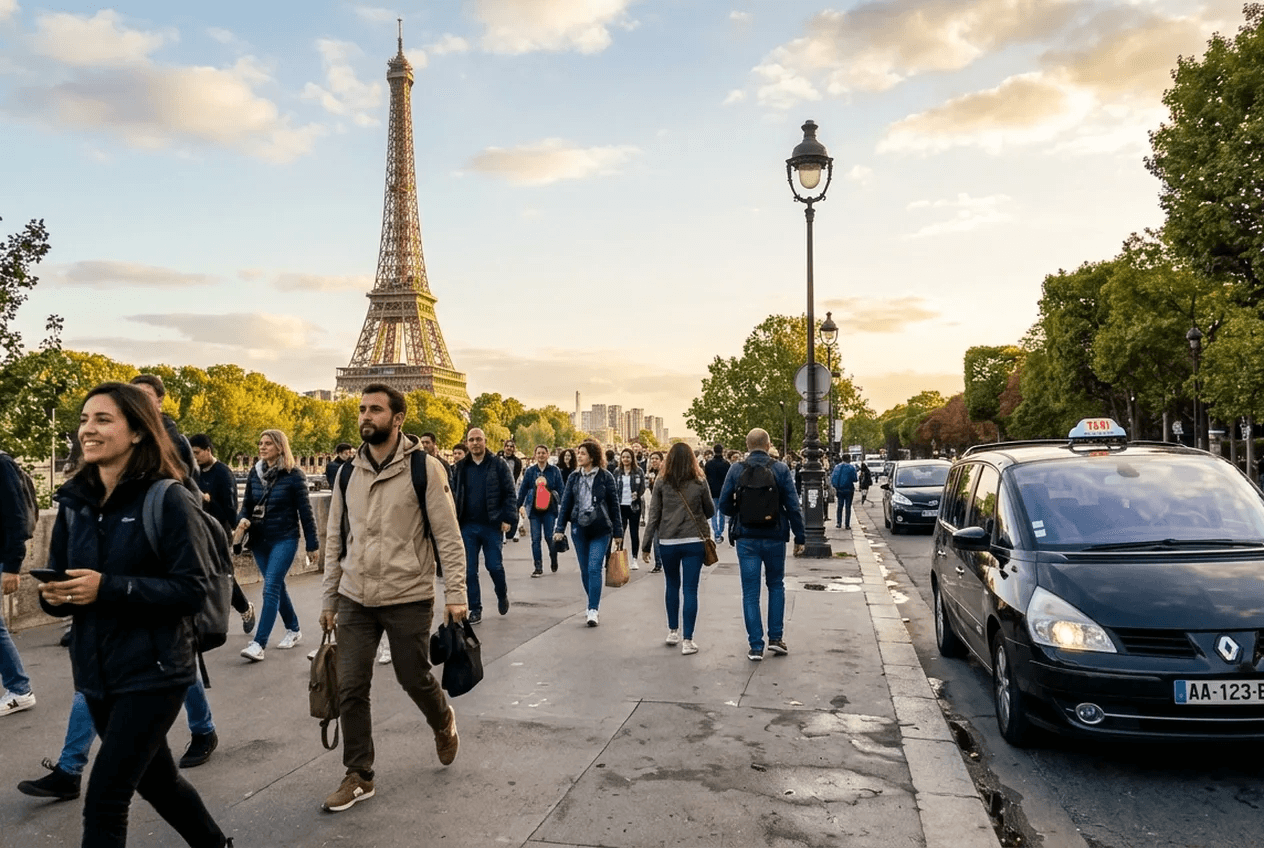
Paris is safe for most visitors. The problems that actually cost people money are not violent crime. They are a handful of scripts that run the same way every day, in the same eight or so places, and they all work the same way: a stranger gives you a reason to stand still, look down, or use your hands.
This guide covers the 10 scams that cost Paris visitors the most in 2026, with the tell for each one and what to do instead. Every figure below comes from a government advisory, a police report, or press coverage from 2026. Sources are at the end.
The one rule that stops all of them
Do not stop for a stranger who approaches you. Not for a petition, not for a question, not for a dropped ring, not for a bracelet, not for a game, not for a survey, not for a charity, not to be helpful. Say non, merci, keep walking, and do not make eye contact after the first refusal. The second rule follows from the first: keep your hands and your bag to yourself. Every physical scam on this list requires you to hold something, sign something, or let someone touch your wrist.
Paris entry rules are changing too: our EES airport survival guide covers the new EU border checks, and Europe entry requirements for Americans rounds up what each country now asks for. The basics are in our France travel tips for Americans.
1. Fake taxis with rigged card terminals
How it works: This is the most expensive trick a visitor can meet in Paris right now, and it does not happen on the street. It happens on a card terminal. In June 2026, The Connexion reported that four men had been charged with fraud and money laundering over a scheme that ran from December 2024 to January 2026. Drivers in unlicensed cars passed as taxis near the Eiffel Tower, the major train stations, and outside department stores, and charged tourists through SumUp card terminals with the final amount hidden or the screen damaged. One 19 euro fare was charged as 1,900 euros. Victims have filed claims for at least 680,000 euros in overpayments. The men used eight vehicles fitted with fake plates and designed to look like taxis. They face up to ten years in prison.
What it costs: Hundreds to thousands of euros per ride, and many victims did not notice until the debit landed days later.
The tell: A card terminal where you cannot see the final amount, or a driver who rushes you through the payment.
What to do: Read the amount on the terminal before you tap or enter your PIN, every time, in every taxi. Take licensed taxis only, recognisable by the Taxi Parisien sign on the roof, lit green or red to show availability. Or use a ride-hailing app, where the price is fixed before the ride and can be disputed afterward.
2. Fake museum tickets, and the Louvre case
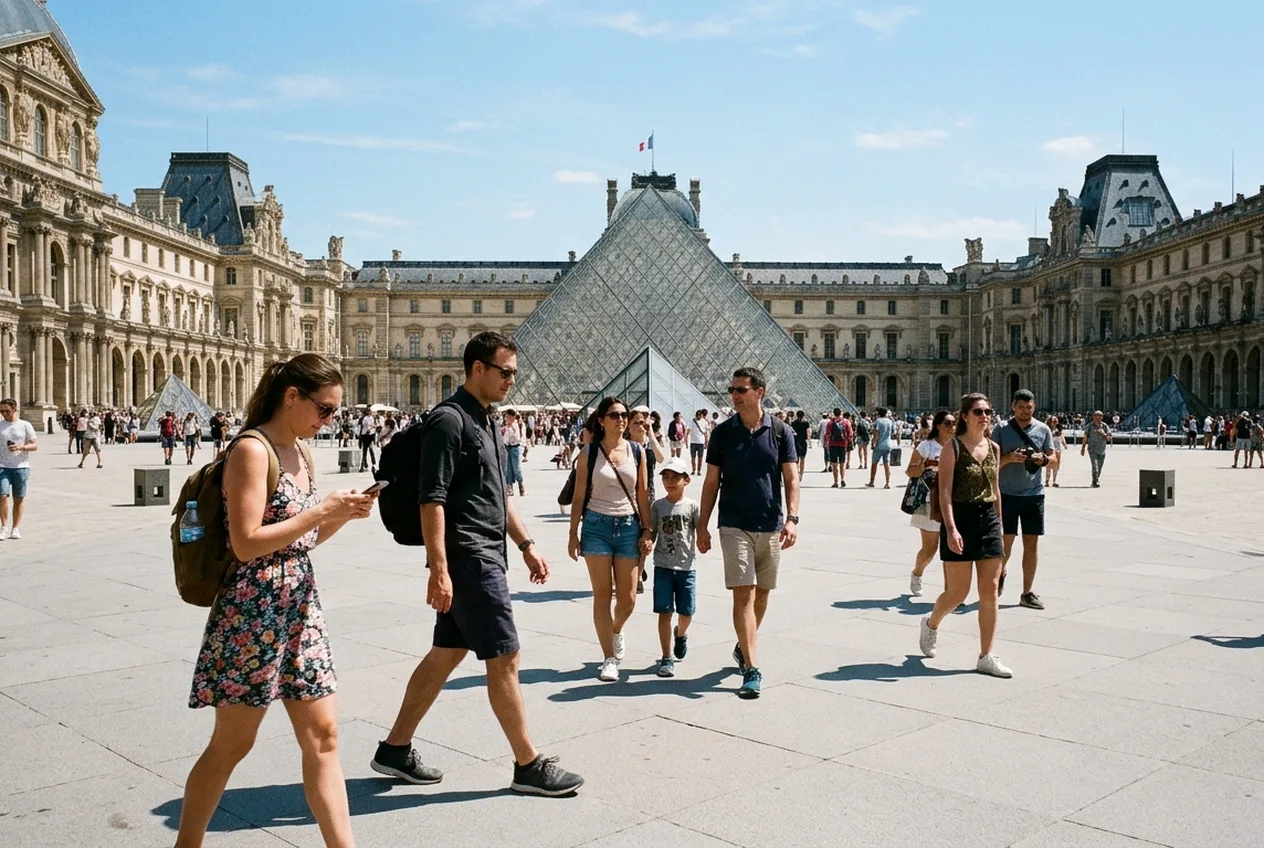
How it works: Fake websites mimic the official booking pages for the Louvre, the Musee d’Orsay, the Palace of Versailles, and other Paris attractions, selling counterfeit tickets, invalid QR codes, or hugely overpriced ones. They show up in search results and paid ads, and physical touts sell the same bad tickets outside the Louvre, near the Versailles RER C station exit, and outside the Musee d’Orsay.
The scale of the problem became clear in February 2026, when French authorities arrested a group including two Louvre cashiers and two tour guides over a ticket fraud scheme prosecutors say ran for nearly a decade and cost the Louvre around 10 million euros. According to reports, guides reused entry tickets repeatedly, split larger groups into smaller ones to avoid higher fees, and in some cases bribed museum employees to smooth their passage through checkpoints. The group may have brought in up to 20 groups a day while only paying for one. Police seized 957,000 euros in cash, 486,000 euros from bank accounts, three cars, and the contents of numerous safe deposit boxes.
The tell: A ticket price well below the official one, a seller who is not the museum, or a guide whose ticket looks used.
What to do: Buy tickets only from the official museum website. For the Louvre, that is the only safe source. Never buy an entry ticket from a stranger outside the building.
3. Pickpockets on the Metro
How it works: Organised pickpocket teams work specific Metro lines and stations. Line 1 is the highest risk. It runs from CDG through the tourist core, the Louvre, the Tuileries, the Champs-Elysees, and Bastille, and carries an enormous tourist volume in relatively small carriages. Lines 4 and 9 are the other hotspots, along with Chatelet-Les Halles station, which records the highest frequency of incidents. The method is usually a distraction: a crowd at the doors, a sudden stop, a shove, a hand in a bag.
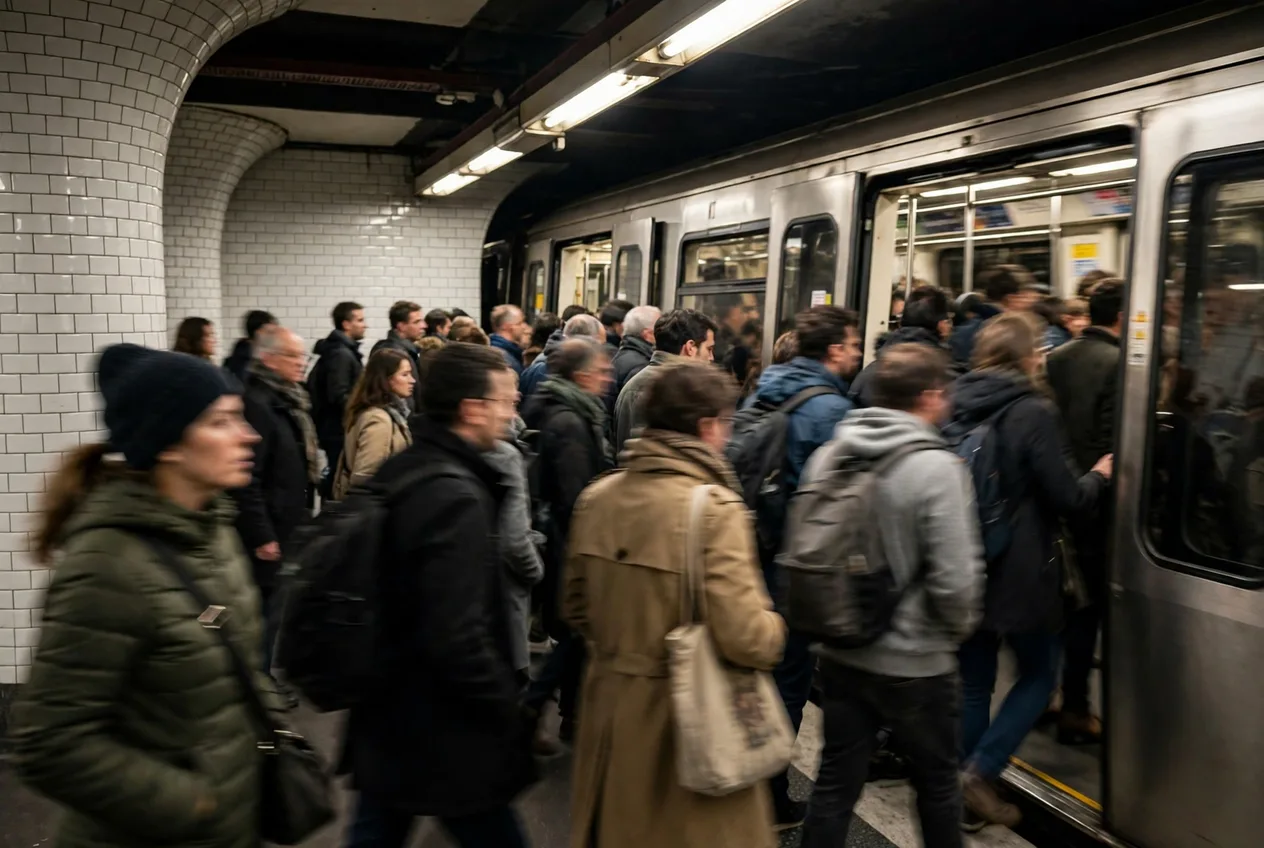
What it costs: Police and gendarmerie recorded about 95,000 non-violent thefts from a person in Paris in 2025, according to the Interior Ministry statistical service. That figure covers residents and visitors combined, because France publishes no tourist-only count.
The tell: A carriage that is crowded for no clear reason, or someone pressing close at the doors.
What to do: Keep your bag in front of you with the opening against your body, not on your back. Put your phone and wallet in a front pocket or an inside pocket, not a back pocket or an open tote. Be extra careful on Line 1, at Chatelet-Les Halles, and at the doors.
4. The petition
How it works: A young woman, sometimes several, approaches with a clipboard and asks if you speak English, pushing a petition at you, usually for a deaf-and-mute charity or a children’s cause. While you stop and read, an accomplice goes through the bag you have put down or the pocket you cannot see. If you sign, they then demand a cash donation. The Paris Police Prefecture states plainly that these are fake petitions: signing and paying does not support a real cause, and it funds clandestine operations instead. This is the most consistently reported tourist scam in Paris, operating at almost every major monument in rotating shifts throughout the day.
Where: Outside the Louvre, along the Tuileries, at Trocadero, on the Champs-Elysees, in the Latin Quarter, and near Notre-Dame.
The tell: Any clipboard near a Paris tourist site.
What to do: Do not stop, do not make eye contact, do not engage. Say non, merci, and keep walking.
5. The gold ring
How it works: Someone walking toward you bends down, picks up a gold-coloured ring at your feet, and asks if it is yours. It is not. They insist you take it, it is your lucky day, they cannot wear it. Once it is in your hand they ask for money for a coffee, or for a reward, and become difficult if you refuse. The ring is brass, costs almost nothing, and there is a bag of them. In February 2026 alone, police recorded 47 reports of the gold-ring scam near the Eiffel Tower.
Where: The Seine quais, the bridges, the paths near Notre-Dame, and the Eiffel Tower and Trocadero.
The tell: A ring that appears on the ground right in front of you.
What to do: Do not take it. Say non and keep going. Do not accept gifts from strangers on the street.
6. The friendship bracelet
How it works: Someone takes hold of your wrist, usually in a friendly, joking way, and starts knotting coloured thread around it before you have decided anything. Once it is on, removing it yourself feels socially awkward, and they demand 5 to 20 euros for the bracelet. Some follow you and get persistent about payment. It is also used as a distraction while an accomplice picks your pocket.
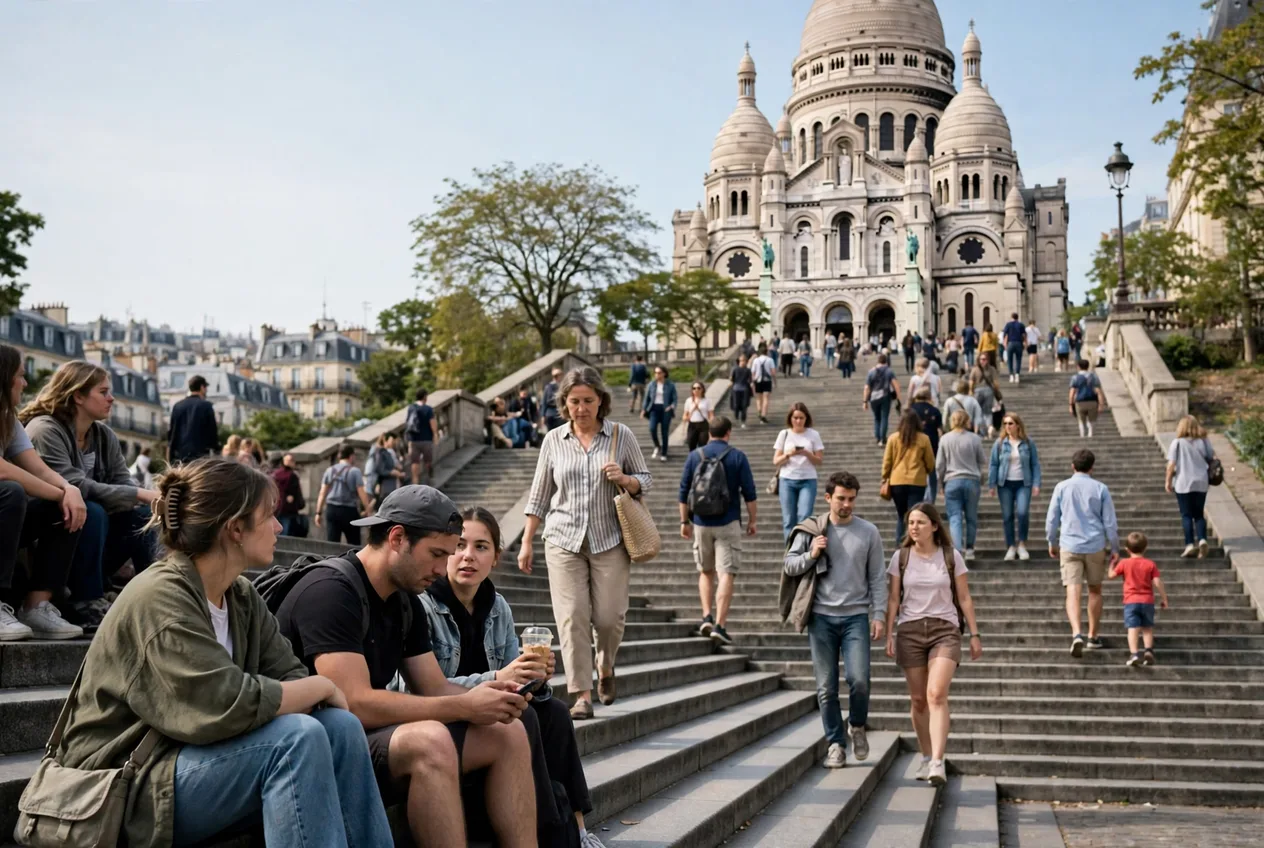
Where: The steps below Sacre-Coeur, the funicular, and occasionally Montmartre side streets. The approach via the steps from Anvers Metro has the highest concentration. The funicular route is significantly less exposed.
The tell: Anyone approaching with string or thread in their hands.
What to do: Keep your hands away from anyone approaching with string. Do not let them touch your wrist. Take the funicular up to Sacre-Coeur instead of the steps.
7. The shell game
How it works: A quick card or cup game, the jeu du bonneteau, is set up on a bridge over the Seine or a plaza, designed to look winnable. Accomplices posing as fellow players win in front of you specifically to draw you into a bet you cannot win. The game is rigged, and there is often a lookout.
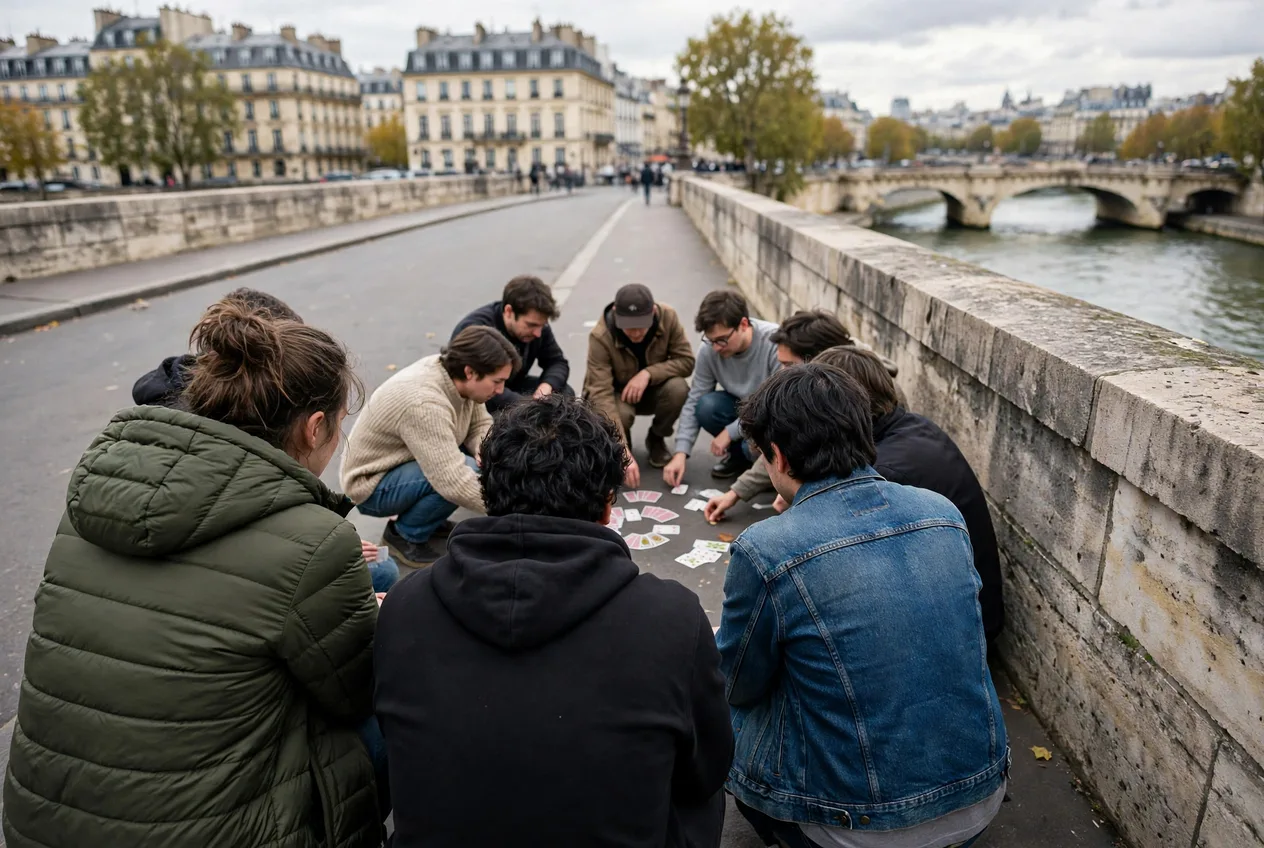
Where: Beneath and around the Eiffel Tower on the Champ de Mars, Trocadero plaza, along the Champs-Elysees near Avenue Montaigne, Montmartre near Sacre-Coeur, and busy Metro exits at Chatelet.
The tell: A crowd gathered around a small game on the pavement, with people winning easily.
What to do: Do not stop to watch, do not bet. Running the game is a criminal offence in France, not a grey-area hustle.
8. Fake police wallet inspection
How it works: Con artists posing as plainclothes police officers approach tourists on the Metro or near major landmarks, flash a fake or real-looking badge, and demand to inspect wallets, phones, or bags for counterfeit money or stolen goods. The inspection is the theft.
Where: Metro lines 1, 4, and 9, near the Eiffel Tower on the Champ de Mars, around the Louvre, and at the Chatelet-Les Halles interchange.
The tell: A plainclothes officer who wants to look inside your wallet on the street.
What to do: Real French police, the Police Nationale, always wear uniforms when stopping members of the public on the street or the Metro. If someone in plain clothes demands your wallet, refuse, walk to a staffed place, and call 17.
9. Airport taxi touts
How it works: Touts inside the arrivals halls at CDG and Orly approach tired travelers and offer a taxi, then lead them to an unmarked car and quote a huge flat fee at the end, run up the meter with a longer route, or claim the card did not work to force cash. In one reported case, unlicensed drivers charged 100 euros per person to travel to Paris for a family of four, 400 euros for a ride that should have cost a fraction of that. Official taxis from the airports run on fixed fares: 56 euros to the Right Bank and 65 euros to the Left Bank from CDG, 44 euros and 36 euros from Orly, depending on the bank of the Seine.
The tell: Anyone offering you a taxi while you are still inside the terminal. Licensed drivers never wait inside.
What to do: Follow the signs to the official taxi rank outside, or the official taxi booth by the luggage carousels at CDG, where staff will walk you to the stand and tell you the exact cost. Or take the RER B train, or book a G7, Uber, or Bolt in the app. Taxis must accept credit cards. Do not let a driver claim the machine is broken.
10. Tuk-tuks and flat-fee rides
How it works: Tuk-tuks, or pedicabs, near tourist sites show you a price list or point to one on the side of the vehicle, but once you arrive, the driver demands more money and says the price was per person. There are a few official tuk-tuk companies, like Turtle, which you can only hail through their app, but tuk-tuks are not a Parisian thing. The same trick runs in regular taxis around the Eiffel Tower at night, where official drivers try to charge a flat fee to your hotel at an amount far above the meter. A taxi driver should never charge a flat fee within Paris.
The tell: A price that is only agreed after you are already in the vehicle, or a flat fee for a ride inside the city.
What to do: Skip the tuk-tuks. The Metro is fast, and an electric Lime bike, bookable through the Uber app, is cheap and quick. In a taxi, make sure the meter is running. If it is not and the driver says flat fee, get out and take the next one.
If you were scammed
Call the police on 17, or 112 from any phone. For a medical emergency, call 15 for an ambulance. Report a theft on the Metro or RER at an RATP ticket desk, in English, or file a complaint online through plainte en ligne, or at any commissariat. You will need the police reference number for insurance, banks, and your embassy. The Paris Police Prefecture can be reached on +33 1 53 71 53 71. Screenshot everything before it disappears, the page, the chat, the account details, the receipt. Call your bank the same day if money left your account, and ask your card issuer to block the card if a terminal was involved.
Sources: The Connexion: Four men charged over a fake taxi card terminal scheme, a 19 euro fare charged as 1,900 euros , Art at Law: The Louvre 10 million euro ticket scandal, February 2026 arrests , TripGuards: Paris scams 2026, 47 gold-ring reports near the Eiffel Tower, CDG and Orly fixed taxi fares , Paris Police Prefecture via VoyageWindow: Fake petitions fund clandestine operations, scams around the monuments , UK Foreign, Commonwealth and Development Office: Travel advice for France , Government of Canada: Travel advice for France, illegal taxis at Paris airports , Europe Says: Paris taxi scam, four men charged, eight vehicles with fake plates , GACS Safe Traveller: Paris, fake taxi fares at CDG and Orly, Police Prefecture contact , Paris Tourism: Fifteen Paris scams, the petition as the most common , Atlas Guide: France scam overview 2026, Metro Lines 1 and 4 pickpocket risk .
Good Trip keeps local etiquette, scam warnings, emergency numbers, offline phrasebooks, and currency conversion on your phone. Download it before you fly.
Related guides

Where to Travel for Christmas 2026
Christmas markets in Germany, France, Switzerland and Belgium, city lights in London and Tokyo, warm weather in Mexico and Thailand, with dates and watch-outs.
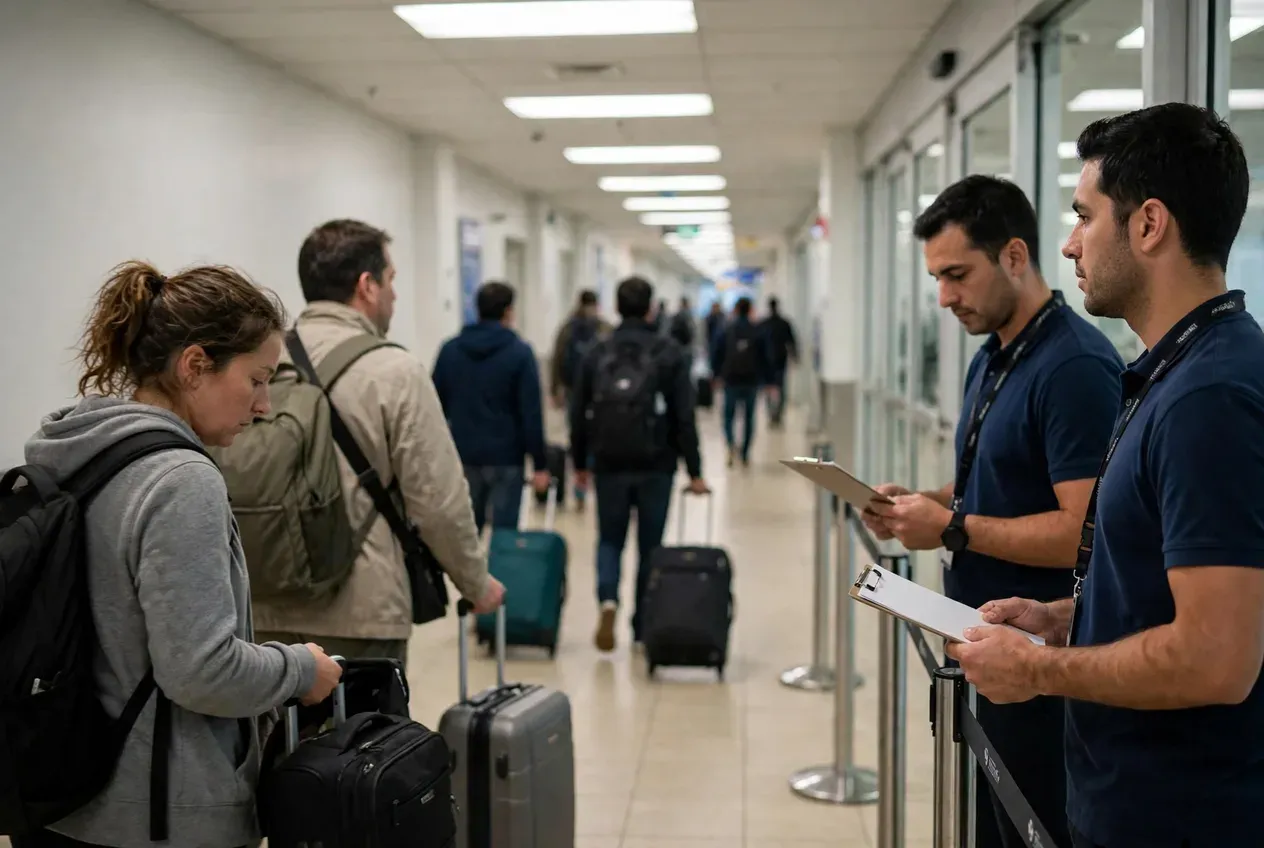
Mexico Scams 2026
The 10 scams costing Mexico visitors most in 2026: Cancun's airport gauntlet, timeshare fraud, police shakedowns, fake Visitax, and the rule that stops them.
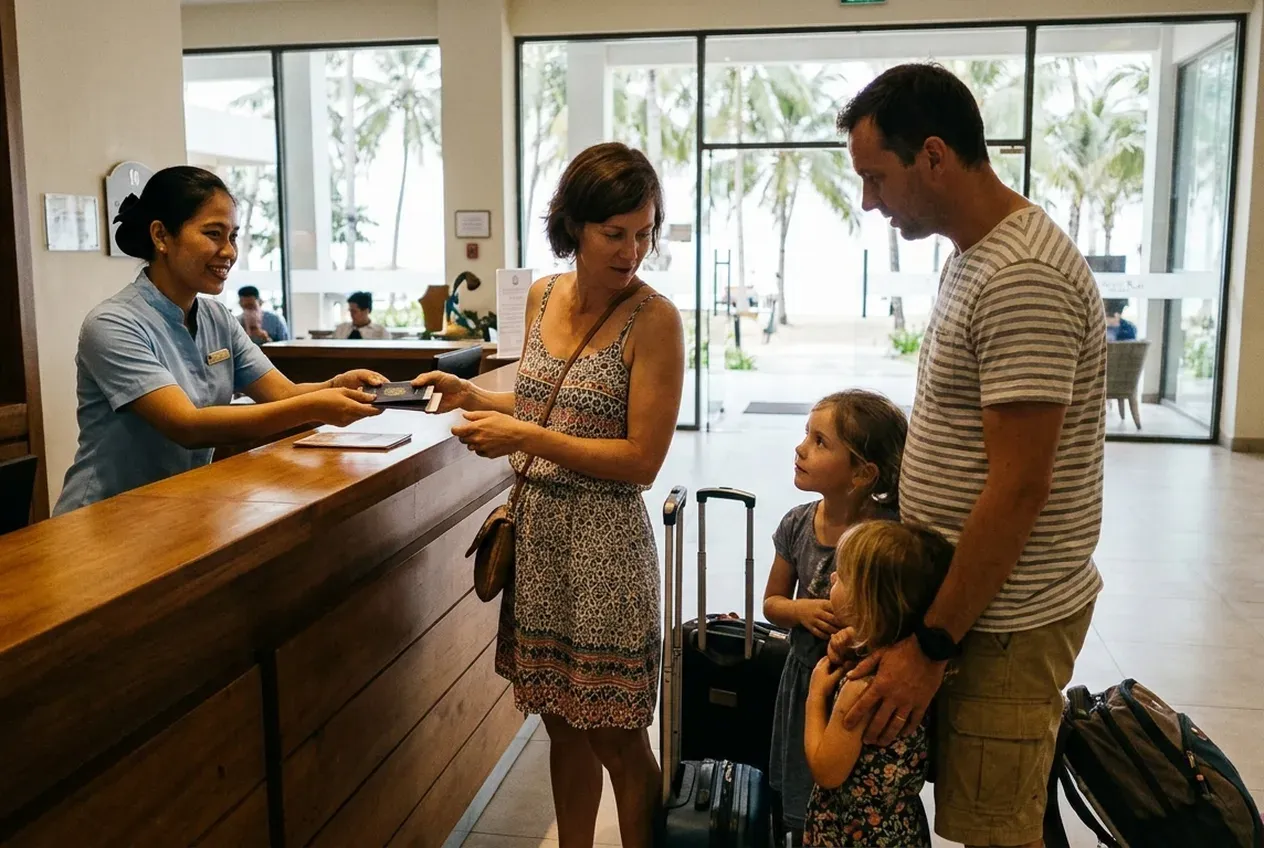
Mexico Travel With Kids: New Law Requires Minor Paperwork
Mexico's new tourism law makes hotels verify your relationship to any child traveling with you. Which documents to bring, and what happens if you can't.
Take Good Trip offline.
Culture tips, phrasebooks, scam warnings, and emergency data for Japan, Korea, Vietnam, Mexico, and 28 other countries.
Get Good Trip on the App Store →