Bali Scams 2026
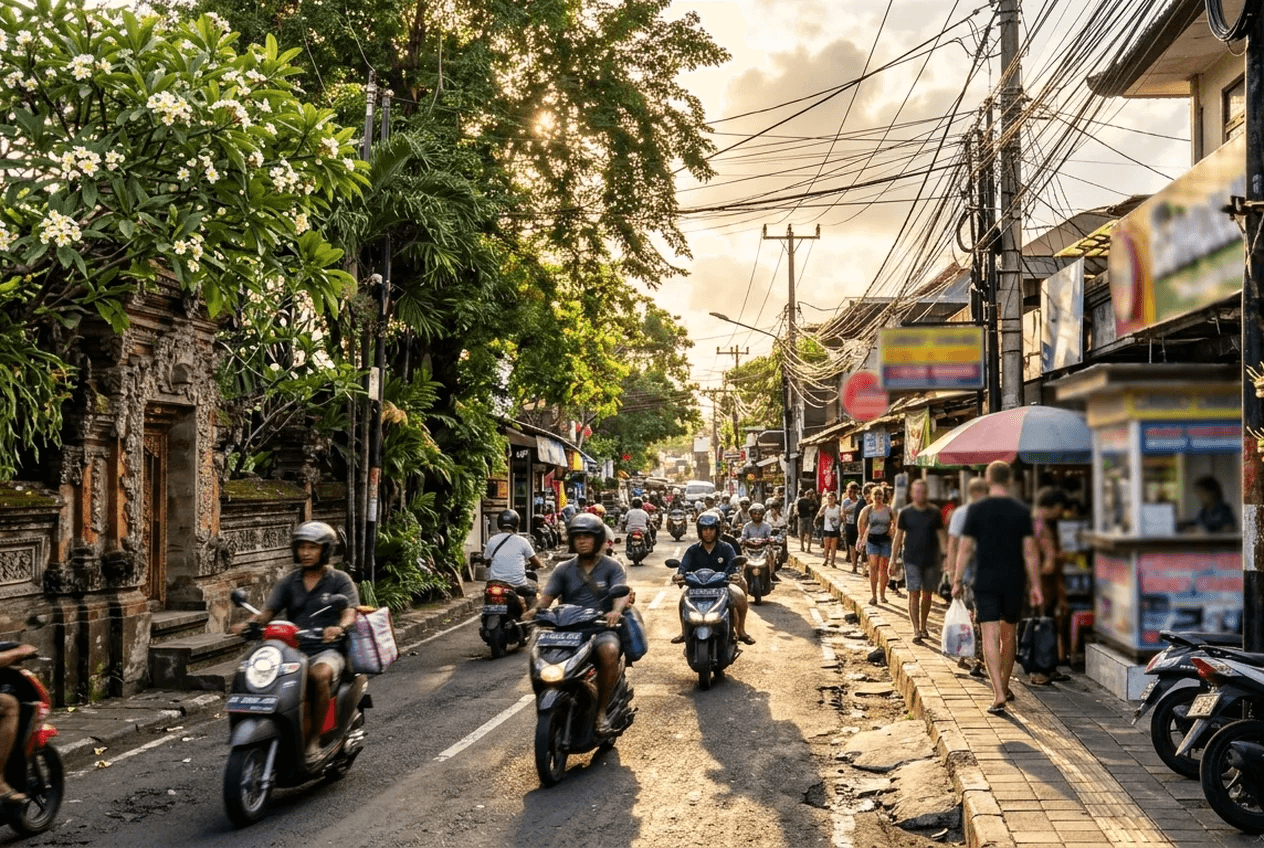
Bali is safe for most visitors. The problems that actually cost people money are not violent crime. They are a handful of scripts that run the same way every week, and most of them start before you land: a fake government website in a search ad, a villa listing that does not exist, a taxi stand that will not let your Grab in.
This guide covers the 10 scams that cost Bali visitors the most in 2026, with the tell for each one and what to do instead. Every figure below comes from a government advisory, a police report, or press coverage from 2025 and 2026. Sources are at the end.
The three official sites, before anything else
Almost every Bali scam starts with confusion about paperwork, so get this straight first. There are three separate things, three separate government sites, and only these addresses are real.
- All Indonesia arrival card, free, at allindonesia.imigrasi.go.id. Mandatory at every international entry point since October 1, 2025. Submit it from 3 days before arrival through the day you land. It is not a visa.
- e-Visa on Arrival, IDR 500,000, at evisa.imigrasi.go.id. A 30 day stay, extendable once by 30 days. A proposal to raise it to IDR 750,000 was reported in August 2026 but has not been adopted.
- Bali tourist levy, IDR 150,000, paid once, at lovebali.baliprov.go.id. There is also a levy desk near international arrivals at the airport.
The rule that catches all of it: a real Indonesian government site ends in .go.id. Anything else asking for your passport and card details is not the government, no matter how official the logo looks.
Bali’s scams have close cousins across the region: compare the common scams in Thailand and the common scams in Vietnam before a multi-country trip. For the practical basics, see our Indonesia travel tips for Americans.
1. Fake arrival card and visa websites
How it works: You search for the arrival card or a Bali visa and the top result is a paid ad for a site with a name like Indonesia Visa Online. It looks official, with coats of arms and flags. It takes your details, submits the free form to the real authority, and charges you for the privilege.
What it costs: AAP reported on May 12, 2026 that scam websites had charged Australian travelers up to A$204 for the free card. The Bali Hotels and Restaurants Association has warned of copies charging around 100 euros.
The tell: A fee on the arrival card, or a domain that does not end in .go.id.
What to do: Type allindonesia.imigrasi.go.id yourself instead of tapping a search ad. The card costs nothing. Anyone who wants money for it is not the authority.
2. Fake tourist levy websites
How it works: Lookalike pages charge three to four times the official levy, or add a service fee on top of it. Bali.live reported in August 2026 that visitors were landing on scam sites, and that slow processing on the real site had even led to double charges for some people who paid twice.
What it costs: The real levy is IDR 150,000, paid once. About 1.53 million foreign visitors, roughly 37 percent, had paid it by August 2026.
The tell: Any price above IDR 150,000, or a processing or service fee.
What to do: Pay once, on lovebali.baliprov.go.id or at the airport desk, and screenshot the QR receipt on your phone.
3. Fake villa listings on social media
How it works: A scammer copies photos from a real villa, posts the listing on Instagram, Facebook, or WhatsApp at a price well below the market, and asks for a deposit by bank transfer to a personal account or a crypto wallet. The villa either does not exist or is not theirs. One widely reported case involved two Australians who allegedly transferred more than $120,000 for a villa in Pererenan that did not exist.

What it costs: This is the most expensive Bali scam by far. The Bali Villa Rental Managers Association recorded more than 101 victims of villa rental fraud in 2025, with losses reaching hundreds of millions of rupiah. The scam peaks in high season, when real availability is tight and people move fast. Seminyak, Pererenan, and Nusa Lembongan are the most targeted areas.
The tell: A luxury villa at a cheap price, pressure to pay today to hold it, and a refusal to do a live video walkthrough.
What to do: Book through a platform with buyer protection, like Airbnb, Booking.com, or Agoda. Never wire a deposit for a villa you found on social media. Reverse image search the photos. Ask for a live video walkthrough that shows the street sign, the pool, and the bedrooms in one take.
4. Money changer short-change
How it works: The Bali classic. A small booth offers a rate far above the bank rate. The clerk counts a big stack of rupiah at speed, folds a few notes into a palm, and hands you less than the total. Another version puts IDR 100,000 notes on the top and bottom of the stack and IDR 10,000 or 1,000 notes in the middle. Typical losses run IDR 100,000 to 300,000 per incident.
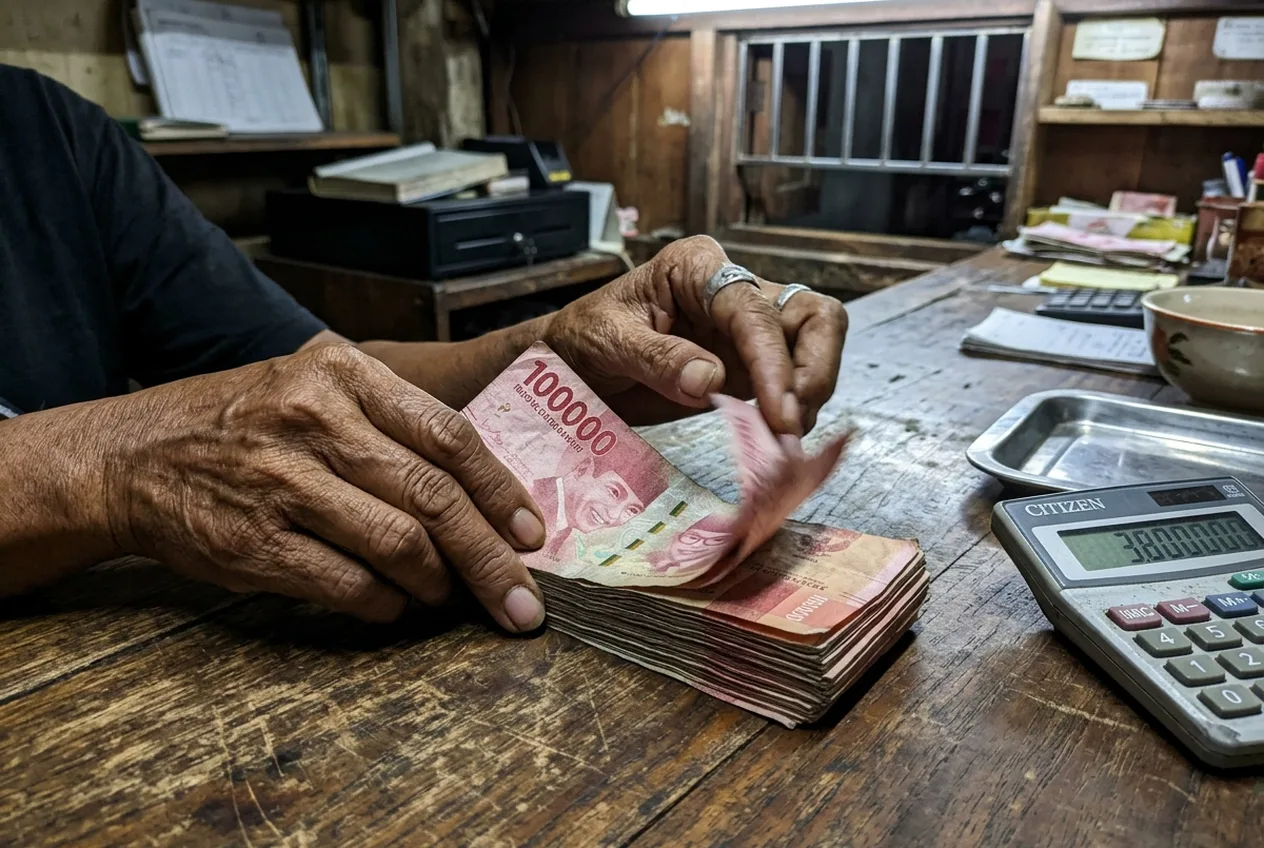
The tell: A rate that beats every other changer on the street, and a count you cannot follow.
What to do: Use only a licensed changer showing the Bank Indonesia authorization logo with a QR code, which you can scan to check the business license. PT Central Kuta, with the green sign, is the name long-term residents point to. Or withdraw from an ATM at a bank branch instead. Count every note yourself before you leave the counter, and never hand the stack back for a recount.
5. Fake Blue Bird taxis and meter refusal
How it works: Copycat taxis painted in Blue Bird colors, with near identical logos and names like Bluebird Group, wait outside hotels and beach clubs. Or a real-looking driver claims the meter is broken and quotes a flat rate three to five times the metered fare. Some run the meter but take a long route to double the distance.
The tell: A taxi that looks almost like a Blue Bird, or any driver who will not run the meter.
What to do: The UK Foreign Office names Bluebird, Silverbird, and Express as the registered companies. Better still, book in Grab or Gojek and get into the car whose plate matches the app, even when other drivers pull up first.
6. Taxi touts and app no-pickup zones
How it works: This one is not a single driver, it is a local system. Village community councils, called banjar, set fixed taxi fares in their own areas, and in some places app drivers are blocked from picking up at all. Reporting in June 2026 described Canggu as an unofficial no-go zone for app drivers, with rides accepted and then cancelled and local fares running 10 to 20 times the app price in some cases. One Canggu driver was arrested for stopping app cars and extorting tourists. The same pattern shows up at Padangbai Port, Sanur Port, Echo Beach, and Pandawa Beach.
The tell: Your app ride is cancelled, sometimes two or three times, and a man is waiting with a flat price.
What to do: Check the app fare before you accept any quote, so you know what the ride should cost. Walk a few minutes out of the zone and book again, or arrange a pickup through your hotel. At the airport, use the Grab and Gojek lounges outside arrivals. Stay calm. Arguing in someone else’s village rarely ends well.
7. Scooter damage claims
How it works: You return the scooter and the owner points to scratches that were already there, with your passport as leverage. The rental asked for your passport as the deposit and took no checkout photos.
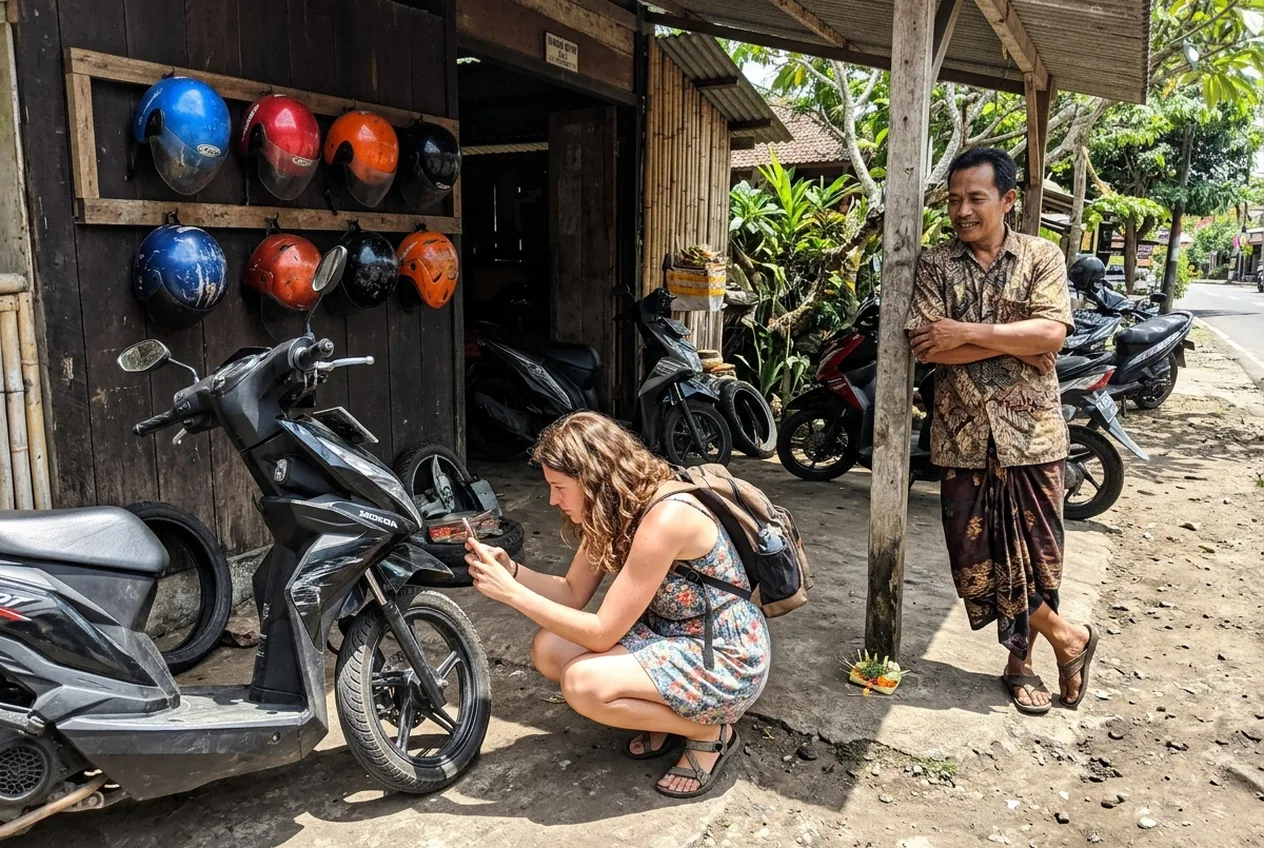
What it costs: Whatever they say the damage is worth, and you have no passport until you pay.
The tell: No checkout photos, and a request for your passport instead of a photocopy.
What to do: Video the bike, lights, and brakes with the owner before you ride. Leave a photocopy rather than the passport. Carry your home license and an International Driving Permit with a motorbike endorsement. Wear a helmet. Riding without the right license can also void your travel insurance, and police do check: an operation from May 1 to 3, 2025 in Canggu, Uluwatu, Kuta, and Seminyak seized 56 vehicles and cited 81 riders, 30 of them tourists.
8. ATM skimming and card fraud
How it works: A skimmer on the card slot reads your card and a hidden camera records your PIN. Or a fake phone number is stuck on the machine, and calling it hands your details to the scammer. The UK Foreign Office describes credit card fraud as common in Indonesia and warns not to let your card out of sight during a transaction.
The tell: A loose card slot, a camera you cannot account for, or a support number taped to the machine.
What to do: Use ATMs inside bank branches, shops, or malls. Cover the keypad when you enter your PIN. If a machine looks tampered with, walk away and use another one. Check your bank app the same day.
9. Fake police and on-the-spot fines
How it works: Someone in a police-style uniform, often on a motorbike, waves you over and claims a traffic violation, a helmet problem, or a missing document, then offers to settle it on the spot for cash. Real Indonesian police do not collect cash fines at the roadside. In Kuta and Seminyak there is a nastier version: someone offers you drugs, and the seller is working with corrupt officers, so the buyer is caught moments later and a large bribe is demanded.
The tell: A fine that can only be paid in cash, right now, to this person.
What to do: Politely insist on a formal ticket, called a tilang, and offer to go to the police station. Real officers will agree. Fake ones will not. Never buy drugs in Bali. The penalties are severe and the sting version of this scam is designed to trap you.
10. Temple touts and salon price traps
How it works: Unofficial collectors outside a temple charge you for a sarong or an entrance fee that is already covered at the official ticket window. At spas, nail salons, and tattoo parlours, the price agreed at the door grows once the work is done. The UK Foreign Office notes that scams at tattoo parlours, nail salons, and spas have risen in Bali.

The tell: Someone collecting money on an approach road instead of at the ticket window, or a service with no price agreed before it starts.
What to do: Pay only at official ticket windows inside the temple entrance. Agree the full fee in advance at any salon or parlour, and walk away if the price changes mid-service.
Two things that are not scams, but know them anyway
Drink spiking, including methanol in local spirits, is a real risk in Bali, and Australia’s Smartraveller warns about it directly. Never leave a drink unattended and be wary of very cheap local spirits. And card game gambling scams, run by organised gangs, are also on Smartraveller’s list: a friendly game with strangers that you are meant to lose.
If you were scammed
Call the police on 110, free from any phone, 24 hours a day. For tourist-specific help, including scam reports and lost passports, call the Bali Tourist Police on +62 361 224111. For a medical emergency, call an ambulance on 118 or 119. Screenshot everything, the page, the chat, the account details, the receipt, before it disappears. Call your bank the same day if money left your account, and tell your card issuer to block the card if it was skimmed.
Sources: AAP via The Canberra Times: Scam websites charging Australian travelers up to A$204 for the free All Indonesia arrival card , Bali.live: Fake levy links, double charges, and about 1.53 million foreign visitors paid by August 2026 , Seoul Economic Daily: Canggu taxi no-go zone, banjar fares, driver arrested for stopping app cars , InDaily: Police operation May 1 to 3, 2025, 56 vehicles seized, 81 riders cited, 30 tourists , UK Foreign, Commonwealth and Development Office: Travel advice for Indonesia , Australian Government Smartraveller: Advice for Indonesia , Bali Villa Rental Managers Association via Before You Go Travels: More than 101 victims of villa rental fraud in 2025 , Indo Property Hub: Luxury villa scam in Bali, the $120,000 Pererenan case , Fizen blog: Bali scams 2026, arrival card and levy clone sites, taxi no-pickup zones, scooter passport deposits , Clever Tourists: All Indonesia arrival card guide, mandatory since October 1, 2025 , Frangipani Travel: Bali entry requirements 2026, e-VOA price rise proposal not adopted .
Good Trip keeps local etiquette, scam warnings, emergency numbers, offline phrasebooks, and currency conversion on your phone. Download it before you fly.
Related guides
Mexico Scams 2026
The 10 scams costing Mexico visitors most in 2026: Cancun's airport gauntlet, timeshare fraud, police shakedowns, fake Visitax, and the rule that stops them.
Mexico Travel With Kids: New Law Requires Minor Paperwork
Mexico's new tourism law makes hotels verify your relationship to any child traveling with you. Which documents to bring, and what happens if you can't.

Where to Travel for Christmas 2026
Christmas markets in Germany, France, Switzerland and Belgium, city lights in London and Tokyo, warm weather in Mexico and Thailand, with dates and watch-outs.
Take Good Trip offline.
Culture tips, phrasebooks, scam warnings, and emergency data for Japan, Korea, Vietnam, Mexico, and 28 other countries.
Get Good Trip on the App Store →